Showing the single result
One model of LP dry suit inflation hose in smooth urethane construction, available in two lengths (29–35 €). Connects the dry suit inflation valve to the low-pressure port of the first stage regulator. The smooth outer surface reduces snagging on suit material and equipment when routing the hose across the chest.
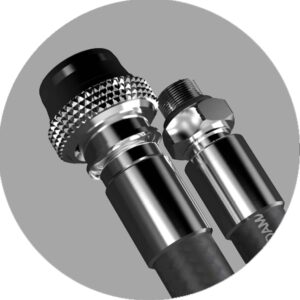
Dry Suit Inflation Hose
The dry suit inflation hose connects the LP inflation valve on the suit (chest position) to a low-pressure port on the first stage regulator. Its function is to allow the diver to add air to the suit during descent to counteract squeeze, and to maintain a comfortable air layer throughout the dive. Hose length and routing must be matched to the regulator configuration and harness setup to avoid excess hose creating a snag hazard or insufficient length creating pull on the suit valve.
The smooth urethane outer construction of this hose reduces friction against suit material and webbing, making it easier to route cleanly across the chest without the hose catching on D-rings, harness webbing, or the suit’s own material. Smooth hoses are also easier to inspect visually for abrasion or kinking. The two length variants (900656 and 900660) allow matching to different torso lengths and regulator port positions.
What to Look For
- Length selection: The hose should route from the first stage to the chest valve with a natural curve, neither pulling on the valve when the diver extends their arm fully, nor hanging loose enough to catch on equipment. Route the hose before diving and trim length if needed — too long is a snag risk in overhead environments.
- Connection compatibility: Verify that the hose fittings (standard LP, 3/8″ UNF) are compatible with the inflation valve on your suit and the LP port on your first stage. If your first stage uses a non-standard LP port, confirm compatibility before ordering.
- Routing with harness: In a BP/W configuration, the dry suit hose typically routes alongside the LP BCD hose. Avoid routing them together in a bundle that restricts independent deployment. The hose should clip or route cleanly without being tied to other hoses.
Maintenance and Care
Rinse the hose with fresh water after every dive, paying attention to the end fittings where salt accumulates. Inspect the hose body for kinks, abrasion through the outer sheath, or swelling near the end fittings — any of these indicate the hose should be replaced before the next dive. A failing LP hose that detaches at depth will rapidly inflate the suit, creating an uncontrolled ascent situation. Replacing hoses at the first sign of wear is the correct approach. Store the hose loosely coiled without sharp bends.
FAQ
Can I use a standard BCD LP hose for my dry suit?
Functionally, a standard LP hose with the correct fittings will connect and deliver air to the suit valve. However, purpose-built dry suit hoses are typically specified for the pressure and flow requirements of suit inflation, and smooth-sheath versions are designed for the specific routing and snag considerations of dry suit use. Using a generic BCD hose is possible in an emergency but the correct dry suit hose is the better long-term solution.
What length hose do I need?
Hose length depends on your torso length, the position of the LP port on your first stage, and how you route the hose. The two length variants (900656 and 900660) cover the range of typical adult configurations. If in doubt, the longer option provides more routing flexibility and can be managed with a clip if excess length is present. Measure the route from your first stage LP port to the chest valve with a piece of string before ordering, allowing for the natural curve of the hose.