Showing all 3 results
None of our dry suits comes with a hood nor with a carry bag that you can choose here Accessories and here Neoprene accessories (5)
The back-zipper range comprises three neoprene dry suits — 5 mm standard neoprene, 3.5 mm pre-compressed neoprene with BDM zipper, and the Neoprene Siberia 2025 — plus a trilaminate back-zip option. All provide integrated thermal insulation from the neoprene construction, with the back zipper running across the upper shoulders. Suits without a hood or carry bag — both available separately.
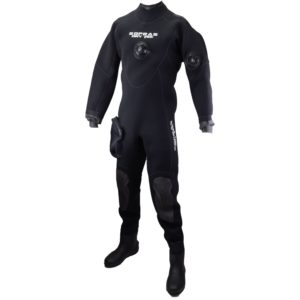
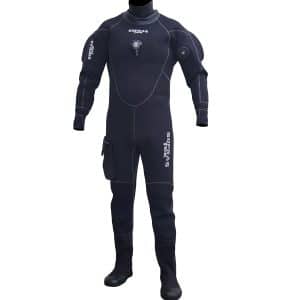
Back-Entry Neoprene Dry Suits
A back-entry zipper runs across the upper back or shoulders. It requires a buddy to open and close the suit, but can provide a cleaner front profile and in neoprene construction offers uninterrupted insulation across the torso. The back-zip range at Sopras Tek is primarily a neoprene dry suit range — these suits provide built-in thermal protection from the foam cell structure of the material, unlike trilaminate suits which rely entirely on the undersuit for warmth.
Neoprene Dry Suit Materials
Standard neoprene (5 mm) has open foam cells that provide insulation and some buoyancy. The limitation is that neoprene compresses with depth — at 30 metres, a 5 mm suit behaves more like 3 mm, losing both insulation and buoyancy. This requires additional ballast adjustment and means the suit performs differently at depth than at the surface.
Pre-compressed (crushed) neoprene (3.5 mm BDM) addresses this by mechanically compressing the foam cells before manufacture. The cells are already at near-minimum volume, so depth has minimal further effect on thickness, insulation, or buoyancy. The result is more predictable dive characteristics across the depth range, at the cost of slightly reduced surface insulation compared to uncompressed neoprene of the same nominal thickness.
The Neoprene Siberia 2025 (850 €) is the warmest specification in the back-zip range, designed for cold and near-freezing water temperatures where maximum insulation is the priority.
What to Look For
- Insulation vs. depth performance: For diving primarily in shallow water (under 20 m), standard 5 mm neoprene provides excellent warmth at a lower cost. For deeper diving where compression affects buoyancy and insulation, the 3.5 mm pre-compressed option delivers more consistent performance across the depth range.
- BDM zipper: The 3.5 mm suit features a BDM (back diagonal metal) zipper format — a metal-tooth waterproof zipper rather than the plastic-tooth construction used in many suits. Metal zippers are more rigid and require specific lubrication; consult the maintenance notes for this suit before diving.
- Undersuit compatibility: Neoprene suits have less internal volume than trilaminate suits, which limits undersuit thickness. Most neoprene dry suit divers use a thin 100 g base layer rather than a heavy undersuit — the neoprene itself provides the primary insulation.
- Buddy dependency: If you regularly dive without a fixed buddy, consider the front-zip alternatives. The back zipper requires assistance for donning and doffing.
Maintenance and Care
Rinse neoprene dry suits thoroughly inside and out with fresh water after every dive. Neoprene degrades faster than membrane fabrics when exposed to salt, chlorine, and UV light — storage out of sunlight is important. The back zipper should be cleaned and lubricated after each dive; consult the manufacturer’s guidance for the specific zipper type (BDM metal or plastic tooth). Neoprene seals — if fitted — are more durable than latex but stretch over time and eventually allow water seepage. Inspect the neck and wrist seal areas regularly. Do not store the suit folded for extended periods; hang it on a wide-shoulder hanger in a cool, dry space.
FAQ
Is pre-compressed neoprene warmer than standard neoprene?
At the surface, standard neoprene of the same nominal thickness is warmer — its uncompressed foam cells trap more air. Pre-compressed neoprene is warmer at depth because it does not lose insulation to compression the way standard neoprene does. For a diver who regularly dives below 20 m, pre-compressed neoprene provides more consistent warmth across the dive profile.
Do I need an undersuit with a neoprene dry suit?
A light undersuit is still recommended, even with neoprene — it wicks moisture, adds a small amount of insulation, and prevents direct skin contact with the suit interior. A 100 g base layer or light fleece is typically sufficient for most neoprene dry suit use. A heavy undersuit is generally not needed and may restrict movement in the tighter-fitting neoprene construction.
Can I use the back-zip suits for technical diving?
Yes, though the majority of technical divers prefer trilaminate front-zip suits for the freedom of movement and self-sufficiency advantages. Neoprene back-zip suits are well suited to recreational cold-water and wreck diving, and are used in technical contexts by divers who prioritise neoprene’s inherent warmth and durability.