Showing all 4 results
Four thermal sock models for use inside dry suit boots or integrated neoprene socks — standard synthetic fill in 200 g and 400 g, and Thinsulate fill in 200 g and 400 g. All are designed to be worn under a dry suit foot, adding insulation to the feet where blood flow is reduced and heat loss accumulates over longer dives.
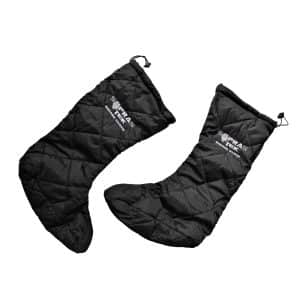
Thermal Socks for Dry Suit Diving
The feet are among the first areas where divers feel cold on longer dives. Blood flow is reduced at the extremities, and the foot has relatively little tissue mass to maintain temperature. Even a well-fitted dry suit with a thick undersuit can leave the feet cold if the foot insulation is inadequate. Thermal undersuit socks address this by adding a dedicated insulation layer inside the suit’s foot section.
The socks are worn on bare feet inside the dry suit, beneath the integrated neoprene sock or inside rubber booties. They are not worn outside the suit or inside separate boots without the suit.
Fill Weight and Fibre Selection
Standard synthetic fill provides reliable insulation at a lower cost. The 200 g version is suited to water temperatures from approximately 12–18 °C; the 400 g version adds meaningful warmth for 6–12 °C or longer dives at lower temperatures. Thinsulate is a 3M synthetic microfibre that provides higher insulation per unit thickness than standard synthetic fill — it compresses less and retains insulation better when the limited space inside a suit foot causes compression. For the same fill weight, Thinsulate socks outperform standard fill socks in real diving conditions. The 200 g Thinsulate sock (43 €) provides similar warmth to the 400 g standard at a lower bulk, which is relevant inside a tight-fitting suit foot.
What to Look For
- Water temperature: Standard 200 g for 12–18 °C; standard or Thinsulate 400 g for 6–12 °C; Thinsulate 400 g for 5 °C and below or extended dives in cold water.
- Suit foot volume: The sock must fit inside the suit foot without compressing to near zero thickness. If the suit has a small integrated sock, a 400 g sock may be too bulky and actually reduce insulation by compressing the fill. Thinsulate variants are the better choice when internal volume is limited.
- Boot fit: Adding a thick sock inside a suit foot increases the effective foot volume. Check that your fins still fit correctly with the sock in place.
Maintenance and Care
Rinse thoroughly with fresh water after each dive and dry completely before storage. Do not wring or twist — this can damage the fill structure. Machine wash on a gentle cycle with mild detergent; do not tumble dry at high heat. Store flat in a dry location. Inspect the sock material for thinning or compression damage — socks that have permanently compressed and lost loft should be replaced, as their insulation value will have degraded significantly.
FAQ
Why use Thinsulate socks instead of standard fill?
Thinsulate microfibre provides higher insulation per centimetre of thickness than standard synthetic fill. In the confined space inside a dry suit foot, where the sock compresses against the suit material, Thinsulate retains more of its insulating performance under compression. For divers with limited internal volume in their suit foot, or for diving in very cold water where maximum warmth per gram matters, Thinsulate is the better specification.
Can I use undersuit socks with a suit that has rubber booties?
Yes. Even if your suit has integrated rubber booties, wearing an undersuit sock on bare feet inside the bootie adds insulation and comfort. The booties themselves are waterproof but provide no thermal protection — the sock fills that role. Ensure the bootie has sufficient volume to accommodate the sock without excessive compression.