The Fins and Masks range at Sopras Tek covers open-heel blade fins for technical diving — rubber blade fins in III and IV series with spring straps, plus the Diva and Retta carbon/composite models — together with ten low-volume masks from frameless backup options to full-frame technical masks, and fin and mask accessories including stainless steel spring straps, SS fin buckles, and neoprene mask straps. For a broader selection of recreational fins and masks, see the full range at SoprasSub.
Fins and Masks for Technical Diving
Fins
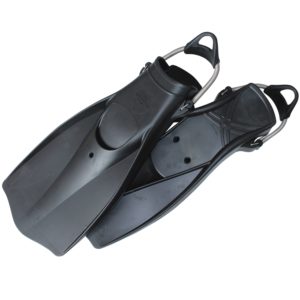
9 open-heel blade fins — Rubber Fins III and IV in black, yellow, pink, and red with spring straps (108–131 €), plus Diva (126 €) and Retta (128 €) premium blade models. Sizes S–XL.
Masks
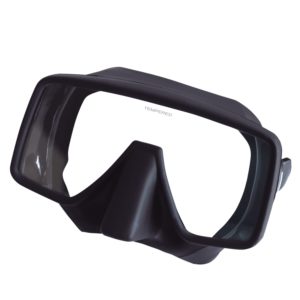
10 masks across framed and frameless formats — Frameless Tek, Shadow Frameless (bungee and silicone strap), Futura, Larga/Larga NEW, Magica, Metal, Corona, and Excel NEW. 34–50 €.
Accessories
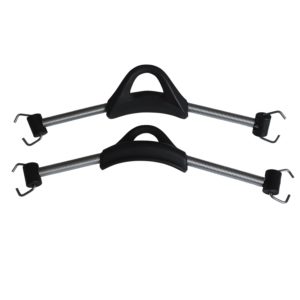
Stainless steel spring straps (38 €, sizes S–Z), SS fin buckles (40 €, sizes S–XL), and neoprene mask strap with bungee (10 €). Replacement and upgrade hardware for fins and masks.
Fins for Technical Diving
Technical diving requires open-heel blade fins — paddle fins with a stiff, responsive blade that delivers thrust across the full range of propulsion techniques used in technical and overhead environments. Frog kick, back kick, helicopter turn, and modified flutter kick all depend on a blade that transmits force efficiently without excess flex. Split fins, optimised for a narrow flutter kick, lack the stiffness and directional control needed for precision manoeuvring in wrecks, caves, or around other divers.
The Sopras Tek fin range is built around the Rubber Fins III and IV series — open-heel fins with full rubber blade construction and an open foot pocket designed for use with drysuit boots or neoprene booties. Both series ship with stainless steel spring straps as standard — no strap adjustment required, consistent fit every time, faster donning and doffing. The III and IV designations refer to blade geometry variants; within each series, colour variants (black, yellow, pink, red) are available at different price points. The Diva and Retta are the premium blade models in the range, with refined blade geometry for divers looking for higher performance propulsion efficiency.
Masks for Technical Diving
The defining characteristic of a technical diving mask is low internal volume — the air space between the lens and the diver’s face. A low-volume mask requires less gas to equalise during descent, less effort to clear if water enters, and sits close enough to the face to provide a wider downward field of view. Reading gauges, checking clip points, and monitoring chest-mounted equipment all benefit from a mask that does not force the diver to tilt their head unnaturally.
The Sopras Tek mask range spans frameless and framed formats. Frameless masks (Frameless Tek, Shadow Frameless, Futura) have no rigid frame — the lens is bonded directly to the silicone skirt, which folds flat for storage and produces a very low-volume profile. They are the standard choice for a backup mask carried in a pocket. Framed masks (Larga, Corona, Excel, Metal, Magica) provide a more structured fit and are typically easier to don one-handed in low visibility. The Metal mask uses an anodised aluminium frame — a distinctive professional-appearance option that also functions as a primary technical diving mask.
What to Look For
- Blade stiffness vs. leg strength: A stiffer fin delivers more thrust per stroke but demands more effort. Match the blade to your leg strength and dive duration — a fin that fatigues you on a 60-minute bottom is wrong regardless of its performance in short bursts.
- Spring straps: All fins in this range either ship with stainless steel spring straps or can be fitted with them (via the Accessories category). Spring straps eliminate adjustment and are more durable than rubber. For drysuit diving with gloves, spring straps are significantly easier to manage on the surface.
- Mask volume and fit: Try any mask on your face without the strap — it should stay in place with a gentle inhale through the nose, confirming the skirt seals against your face geometry. A mask that fits perfectly at the surface will not leak at depth.
- Frameless for backup: Carry a frameless low-volume mask as a backup in all overhead environments. The Frameless Tek (36 €) and Shadow Frameless (42–46 €) fold flat and fit in a standard harness or suit pocket.
- Strap type for masks: The Shadow Frameless is available with a bungee strap (305110) or a standard silicone strap (305100) — the bungee variant is preferred by many tech divers for easier one-handed donning of a backup mask under stress.
Maintenance and Care
Rinse fins and masks with fresh water after every dive. For masks, avoid touching the inside of the lens — skin oils cause fogging. Store masks in a hard case or box to prevent skirt distortion. Keep masks out of direct sunlight in storage — UV degrades silicone skirts over time. Before a new mask’s first use, remove the factory film from the inside of the lens with non-gel toothpaste or a lens prep solution — this step prevents persistent fogging. Inspect fin blade edges and the foot pocket junction for stress cracks after heavy use. Check spring strap attachment points for corrosion at each end of the strap; replace if movement or corrosion is evident.
FAQ
Why do technical divers use blade fins instead of split fins?
Blade fins provide the power and stiffness needed for frog kick, back kick, and helicopter turns — the propulsion techniques that allow a diver to move precisely in confined spaces without disturbing silt or damaging structures. Split fins are efficient for flutter kick in open water but cannot perform these techniques effectively. In overhead environments where fin strikes can cause silt-out or structural damage, blade fin control is not optional.
What is the difference between Rubber Fins III and IV?
The III and IV designations refer to different blade geometry and stiffness profiles within the Sopras Tek rubber fin range. The IV series has a modified blade angle and channel geometry relative to the III. Both are open-heel rubber blade fins for technical diving and ship with SS spring straps. If blade stiffness or propulsion efficiency is the deciding factor, compare both on a pool dive before purchasing — individual leg strength and kicking style influence which model performs better for a specific diver.
Should I carry a backup mask?
In any overhead environment — cave, wreck, or under ice — yes. A mask failure during a penetration where surfacing is not immediately possible is a serious emergency without a spare. A frameless mask (36–46 €) folds flat and fits in a thigh pocket, BCD pocket, or under a drysuit cuff. For open-water technical diving with long decompression obligations, a backup mask is also standard practice — losing your primary mask at 40 m with 40 minutes of deco ahead is a situation that a backup resolves quickly.