Neoprene remains one of the most versatile materials in diving. From full wetsuits that provide thermal protection in temperate waters to hoods, gloves, and training accessories, neoprene products fill the space between bare skin and the underwater environment. Whether you are diving in conditions where a drysuit is not needed — or supplementing your drysuit setup with neoprene extremity protection — the right neoprene gear keeps you warm, focused, and functional.
For more neoprene suits please check SoprasSub and SoprasApnea
Neoprene in Diving: How It Works
Neoprene is a synthetic rubber filled with millions of microscopic gas bubbles. These bubbles provide thermal insulation by slowing heat transfer between the diver’s body and the surrounding water. A wetsuit does not keep you dry — it allows a thin layer of water to enter, which the body heats up and the neoprene traps in place. The thicker the neoprene, the more insulation it provides.
There is a trade-off. Thicker neoprene means more warmth but also more buoyancy, more restriction of movement, and — critically for divers — more compression at depth. As a diver descends, water pressure compresses the gas bubbles in the neoprene, reducing both its insulating properties and its buoyancy. A 7 mm suit that feels warm and buoyant at the surface may offer noticeably less protection at 30 metres. This is one of the fundamental reasons why technical divers operating at significant depths often transition to drysuits, where insulation is provided by an undersuit that does not compress in the same way.
Neoprene Product Categories
Neoprene Suits
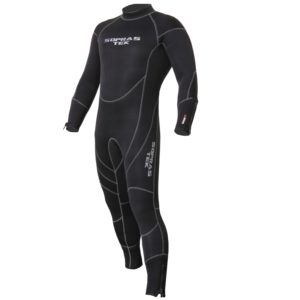
Full wetsuits and semi-dry suits in various thicknesses — from 3 mm for tropical waters to 7 mm for colder conditions. The workhorse of thermal protection for recreational and moderate-depth diving where a drysuit is not required.
Neoprene Accessories
Hoods, gloves, and specialty items like blackout covers for no-visibility training. Neoprene accessories protect the areas where heat loss is greatest — head, hands, and neck — and are used with both wetsuits and drysuits.
Neoprene Suits
Choosing the right wetsuit starts with water temperature. As a general guideline for scuba diving: 3 mm suits are appropriate for water above 24 °C, 5 mm suits for 16–24 °C, and 7 mm suits for 10–16 °C. Below 10 °C, a drysuit becomes the practical choice. These ranges are approximate — individual cold tolerance, dive duration, and depth all influence comfort.
Fit is everything. A wetsuit must be snug against the body without restricting breathing or movement. Any loose areas — under the arms, around the lower back, at the ankles or wrists — allow cold water to flush through the suit, destroying its insulating effect. A poorly fitting wetsuit, regardless of thickness, will not keep you warm.
Semi-dry suits bridge the gap between standard wetsuits and drysuits. They use improved seals at the neck, wrists, and ankles — often made from smooth-skin (Glideskin) neoprene — to minimise water exchange. Combined with higher-quality zippers that resist water entry, semi-dry suits can extend comfortable diving into cooler temperature ranges without the complexity and cost of a full drysuit.
Construction quality matters for longevity and warmth. Look for glued and blind-stitched (GBS) seams — the panels are glued together first, then stitched with a needle that does not fully penetrate the neoprene, preventing water channels through the seams. Cheaper flat-lock stitched suits are more flexible but allow water through every stitch hole.
Neoprene Accessories
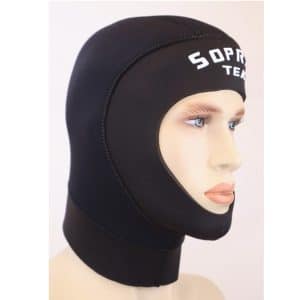
The head is the single largest source of heat loss in the water. A neoprene hood — typically 3 mm to 5 mm — dramatically improves thermal comfort, especially in water below 20 °C. Hoods should seal smoothly around the face and tuck into the suit collar to prevent cold water flushing down the neck. Some wetsuits come with integrated hoods, which eliminate the collar gap entirely.
Gloves protect the hands from cold and abrasion. Thickness ranges from 2 mm for warm water to 5 mm or more for cold conditions. Thicker gloves are warmer but reduce dexterity — a real concern in technical diving where manipulating bolt snaps, clips, valves, and regulators must remain precise. Pre-curved finger designs and textured grip areas help offset the loss of feel. Dry gloves, which seal to a drysuit ring system, are an alternative for the coldest conditions.
Blackout covers — sometimes called no-viz masks or blindfold covers — are neoprene accessories used in no-visibility training. They fit over the mask to completely block the diver’s vision, simulating zero-visibility conditions such as a silted-out cave or a blacked-out wreck. This type of training develops the diver’s ability to navigate, manage equipment, and perform emergency procedures entirely by touch — a critical skill in overhead and low-visibility environments.
What to Look for in Neoprene Products
- Thickness vs depth — neoprene compresses at depth, reducing both warmth and buoyancy. A 7 mm suit provides significantly less insulation at 30 metres than at the surface. If you regularly dive deeper than 20 metres in cold water, consider whether a drysuit would serve you better.
- Fit and sealing — a snug fit without gaps is more important than thickness. Water flushing through a loose suit removes heat faster than conduction through properly fitted neoprene. Seal quality at the neck, wrists, and ankles determines how much water exchanges during the dive.
- Seam construction — glued and blind-stitched seams are the minimum standard for cold-water wetsuits. They prevent water from penetrating through the stitch lines. Taped seams add another layer of waterproofing on the inside.
- Glove dexterity — balance warmth against the ability to operate your equipment. In technical diving, being unable to manipulate a valve or bolt snap because your gloves are too thick is a safety concern. Choose the thinnest glove that keeps your hands functional for the planned dive duration.
- Hood integration — an integrated hood eliminates the gap between hood and suit collar where cold water enters. If using a separate hood, ensure it overlaps generously with the suit collar and creates a smooth seal.
Maintenance and Care
Rinse all neoprene products with fresh water after every dive. Salt, sand, and chlorine degrade neoprene over time, reducing its elasticity and insulating properties. Turn wetsuits inside out before rinsing to clean the side that contacts your skin.
Dry neoprene in the shade. Direct sunlight and UV exposure break down the material, causing it to stiffen, crack, and lose flexibility. Never leave a wetsuit draped over a car roof or drying in full sun. Hang suits on a wide hanger — not a thin wire one — to avoid creasing and stretching the shoulders.
Store neoprene products flat or on a wide hanger in a cool, dry place. Avoid folding or compressing them for extended periods, as this can create permanent creases that weaken the material. Do not store neoprene in sealed plastic bags while still damp — this promotes mould and odour.
Inspect seams and zippers regularly. Small tears or separations in the seam glue can be repaired with neoprene cement before they expand into larger failures. Zipper teeth should move smoothly — rinse them after each use and apply zipper wax or lubricant periodically.
Frequently Asked Questions
What thickness wetsuit do I need?
It depends on water temperature, dive duration, and personal cold tolerance. As a starting point for scuba diving: 3 mm for water above 24 °C, 5 mm for 16–24 °C, and 7 mm for 10–16 °C. Below 10 °C, a drysuit is generally recommended. Keep in mind that neoprene compresses at depth, so deeper dives in cold water may require thicker suits or a transition to dry exposure protection.
Why does my wetsuit feel less warm at depth?
Neoprene insulates through trapped gas bubbles in the material. As you descend, increasing water pressure compresses these bubbles, reducing both the suit’s insulating ability and its buoyancy. At 30 metres, a wetsuit provides noticeably less thermal protection than at the surface. This compression effect is one reason why technical divers often prefer drysuits for deeper or longer dives.
What is a no-viz cover used for?
A no-viz cover is a neoprene blackout cover that fits over the dive mask to completely block the diver’s vision. It is used in training exercises that simulate zero-visibility conditions — such as a silted-out cave passage or a blacked-out wreck interior. The diver practises navigating, managing equipment, and performing emergency procedures entirely by touch. This builds critical skills for overhead and low-visibility diving.
Should I wear a hood even in warm water?
In water above 24 °C, a hood is usually unnecessary for comfort. However, even in warmer water, a thin hood can reduce heat loss on longer dives and protect against jellyfish stings. In water below 20 °C, a hood becomes a significant contributor to thermal comfort — the head accounts for a disproportionate share of the body’s heat loss in water.
How do I prevent my wetsuit from smelling?
Rinse the suit inside out with fresh water after every dive and let it dry completely before storing. If odour develops, soak the suit in a solution of wetsuit shampoo or a mild detergent designed for neoprene. Never use bleach or harsh chemicals — they damage the material. Store the suit dry, in a well-ventilated area, and never sealed in a plastic bag while damp.