Showing all 5 results
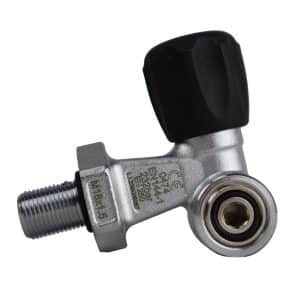
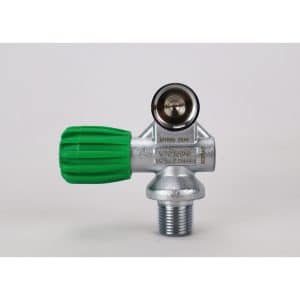
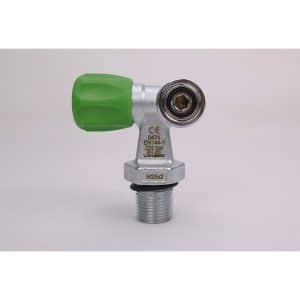
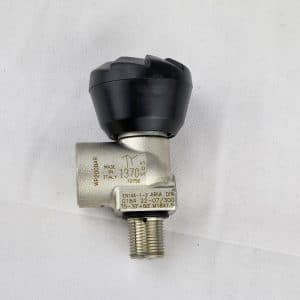
Five oxygen-cleaned valves for cylinders containing Nitrox enriched air or argon — Z valve formats in M18×1.5 and 26×2 EU (EN144) thread standards, a G 5/8″ DIN Nitrox Z valve, a mono valve with vertical knob for argon cylinders, and a V valve with G 5/8″ connection for cylinders requiring dual-outlet access. All suitable for Nitrox up to 100% O₂ where oxygen-cleaned and oxygen-compatible materials are specified.
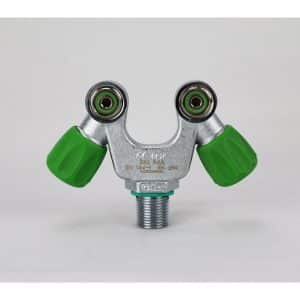
Nitrox and Argon Cylinder Valves
Cylinders containing enriched air (Nitrox) above 23.5% oxygen, pure oxygen, or argon require valves that are oxygen-cleaned — free of hydrocarbons, oils, and combustible contaminants — and constructed from materials compatible with high oxygen partial pressures. Standard air valves are manufactured to less stringent cleanliness requirements and must not be used on oxygen-service cylinders.
Connection Standards
Three connection standards are represented in this range. M18×1.5 is the thread standard used on small argon cylinders (0.5 L, 1 L, 3 L) commonly used for dry suit inflation. The Left Z valve M18×1.5 (56 €) and Mono valve M18×1.5 vertical knob (55 €) are the two options for this thread size — the mono valve’s vertical knob format is useful when the cylinder is mounted in a position where a standard horizontal-knob valve would be awkward to operate. G 5/8″ DIN is the standard technical diving regulator connection, used here on the Left Z valve Nitrox G5/8 (54 €) and V valve Nitrox G5/8 (103 €) for standard-sized Nitrox or deco cylinders. 26×2 EU (EN144) is the European Nitrox standard thread specified by EN 144-3 for cylinders containing Nitrox above 23.5% O₂ — the Left Z valve Nitrox 26×2 (57 €) uses this standard, which is increasingly required at European fill stations for Nitrox cylinders to prevent accidental air fills.
V Valve
The V valve Nitrox G5/8 (103 €, SKU 739200) is a dual-outlet valve providing two independent regulator connection ports on a single cylinder. Used in configurations where two first stages need to connect to one Nitrox or deco cylinder — for example, a deco bottle shared by two divers in a team configuration, or a cylinder providing gas to both a primary regulator and a bailout second stage. The higher price reflects the additional valve body machining.
What to Look For
- Thread standard matching your cylinder neck: M18×1.5 is specific to small argon/specialty cylinders. G 5/8″ is the standard for most Nitrox and deco cylinders used with DIN regulators. EN144 26×2 is the European Nitrox-specific standard — check what your fill station requires and what your regulators accept before ordering.
- Oxygen cleaning validity: Oxygen-cleaned valves have a limited service life before re-cleaning is required — typically 12–15 months. Once an oxygen-clean valve has been exposed to a non-clean regulator, oil, or hydrocarbon lubricant, it must be re-cleaned before oxygen service. Mark the oxygen-clean date on the valve body or log it with the cylinder inspection record.
- Left vs. mono vs. V format: The Z valve (standard single-outlet, left-hand spindle orientation) is the default for stage and deco bottles. The mono valve with vertical knob is for argon cylinders where valve access direction is constrained by the mounting holder. The V valve is for dual-regulator access configurations.
FAQ
What does EN144 26×2 mean and why does it matter?
EN 144-3 is a European standard that specifies a unique thread (26×2 mm) for Nitrox cylinders containing oxygen concentrations above 23.5%. The purpose is to prevent accidental filling of a Nitrox cylinder at an air fill station — a standard G 5/8″ fill connector will not fit a 26×2 thread. Many European technical diving fill stations require this thread on Nitrox bottles. If you travel and have your Nitrox cylinders filled at European facilities, the EN144 valve ensures compatibility with their fill equipment and prevents accidental air fills.
Can I use a Nitrox valve on an air cylinder?
Yes — an oxygen-cleaned Nitrox valve can be used on an air cylinder. The oxygen-clean specification is a quality level that exceeds what is required for air; it is never a downgrade. The only consideration is that if the cylinder is subsequently only used for air, the oxygen-clean status is not required for maintenance and re-cleaning is only needed if the cylinder later returns to oxygen service.