In technical diving, the BCD is not a lifejacket — it is a precision buoyancy and trim platform. The backplate and wing system has become the standard in the technical diving community for good reason: it is modular, configurable, reliable, and places buoyancy exactly where it belongs — behind the diver. Whether you are diving backmount doubles, sidemount, or a single tank, the right BCD configuration gives you the control to stay horizontal, streamlined, and focused on the dive.
For BCD hoses please visit https://soprassub.com/product-category/hoses/bc-hoses/
-
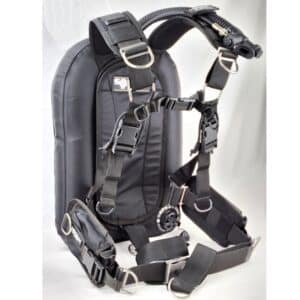
Complete BCD (10)
-
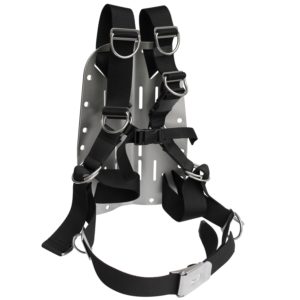
Harnesses (15)
-
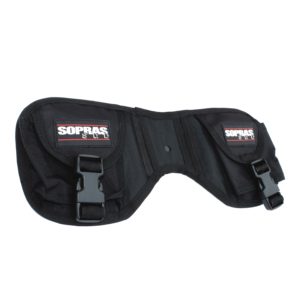
Accessories (35)
-
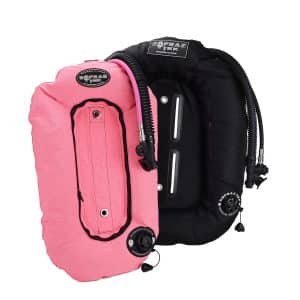
Bladders (28)
-
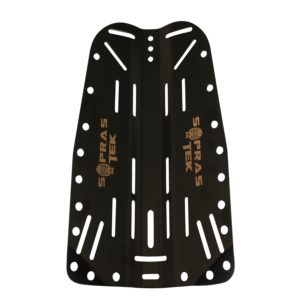
Back plates (22)
-
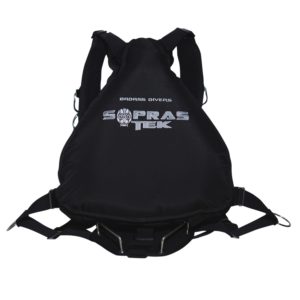
Sidemount (10)
-
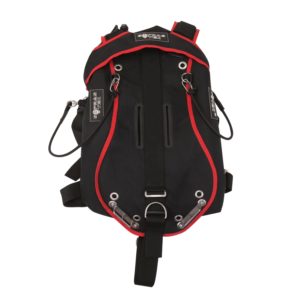
Sideback (2)
-
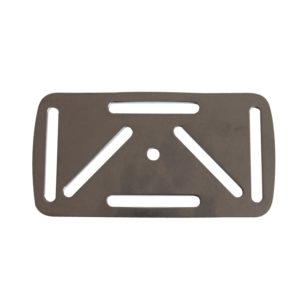
Hardware (50)
-
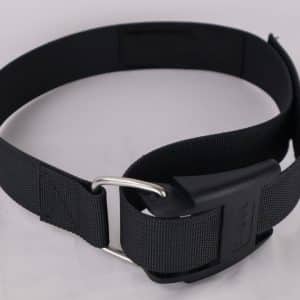
Belt for tanks (8)
Why BCD Choice Matters in Technical Diving
Traditional jacket-style BCDs inflate around the diver’s torso, shifting buoyancy to the sides and front. This forces the diver into an upright or semi-upright position — acceptable for casual recreational diving, but fundamentally incompatible with the horizontal trim required in technical diving. In overhead environments, during long decompression stops, or when managing multiple stage bottles, body position is not a matter of comfort. It is a matter of efficiency, safety, and gas consumption.
The backplate and wing (BP/W) system solves this by separating the components into independent, replaceable modules: a rigid backplate, a continuous webbing harness, and a rear-mounted inflatable bladder (the wing). Each component can be selected, sized, and replaced independently — a wing can be swapped for a larger one when transitioning from single tank to doubles without replacing the entire system. This modularity is the defining advantage of the BP/W approach.
BCD Categories
Back Plates
The rigid foundation of the BP/W system. Available in stainless steel, aluminium, carbon fibre, and titanium — each material offering a different balance of weight, buoyancy characteristics, durability, and cost.
Bladders
The inflatable wing that provides buoyancy. Singles wings, doubles wings, and sidemount bladders in various lift capacities — matched to the diver’s configuration and total equipment weight.
Harnesses
Continuous webbing harness systems that secure the backplate to the diver. A single piece of webbing threaded through the plate provides a universal, fully adjustable fit with a crotch strap for stability.
Complete BCD
Pre-assembled backplate, wing, and harness packages ready to dive. A convenient starting point for divers who want a matched system from a single manufacturer.
Sidemount
Dedicated sidemount BCD systems where cylinders are carried alongside the diver rather than on the back. Designed for cave penetrations, tight restrictions, and divers who prefer independent cylinder access.
Sideback
Hybrid systems that allow the diver to switch between sidemount and backmount configurations using a single harness platform. Versatility for divers who operate in both modes.
Hardware
D-rings, bolt snaps, tri-glides, weight systems, single tank adapters, cam bands, and all the stainless steel and aluminium components needed to build, adjust, and maintain a BP/W or sidemount system.
Belt for Tanks
Cam bands and tank straps used to secure cylinders to the backplate via a single tank adapter or directly through the wing. Available in various lengths for different cylinder diameters.
Accessories
Trim weight pockets, butt plates, bungee kits, weight pouches, and other add-ons that refine the BCD setup for specific diving applications and personal preferences.
Back Plates
The backplate is the structural core of the system. It sits against the diver’s back (or over the exposure suit), distributes the weight of the cylinders across the torso, and provides the mounting points for the harness and wing. The choice of material directly affects both the weight of the system and the diver’s buoyancy characteristics.
Stainless steel is the most common choice for cold-water and drysuit diving. A steel plate typically weighs around 3 kg, providing significant negative buoyancy that offsets the positive buoyancy of thick undersuits and reduces the amount of lead weight the diver needs to carry. Aluminium plates are lighter — roughly 1 kg — and are preferred by warm-water divers and travellers who need to minimise luggage weight. Carbon fibre and titanium plates offer the lightest weight with high strength but come at a considerably higher price point.
Plate size matters. A plate that is too long for the diver’s torso restricts the ability to arch the back and maintain proper trim. Shorter or contoured plates are available for smaller divers. Some manufacturers produce H-shaped or cut-out plates that reduce weight without compromising structural integrity.
Wings and Bladders
The wing is the inflatable bladder that provides buoyancy. It mounts behind the backplate — between the plate and the cylinders — and inflates into the space behind the diver, keeping all buoyancy on the back. This rear-only inflation is what enables the flat, horizontal trim that defines good diving.
Singles wings are narrow, designed to wrap closely around a single cylinder without ballooning out to the sides. Typical lift capacity ranges from 13 to 18 kg (30–40 lbs), which is more than sufficient for a single cylinder with standard exposure protection. Doubles wings are wider to accommodate twin cylinders and provide higher lift — typically 18–27 kg (40–60 lbs) — to handle the weight of double steel tanks, manifolds, and stage bottles. Some extreme-depth exploration wings offer up to 36 kg (80 lbs) of lift.
Single bladder vs dual bladder is a consideration for doubles wings. A single bladder is simpler and lighter. A dual bladder provides redundancy — if the outer bladder fails, the inner bladder can still provide buoyancy. Many technical divers consider dual bladder wings essential for deep or overhead diving, while others prefer a single bladder with a drysuit as the backup buoyancy source.
Harnesses
The Hogarthian harness — a continuous piece of 50 mm (2-inch) nylon webbing threaded through the backplate — is the standard in technical diving. One piece of webbing creates both shoulder straps and the waist belt, with a separate crotch strap running between the legs to prevent the system from riding up. This continuous-webbing approach is infinitely adjustable, has no buckles or clips that can fail, and fits any body shape with proper threading.
Some manufacturers offer padded harness systems with quick-release buckles for convenience. While these are popular with recreational divers transitioning to BP/W, technical divers generally prefer the simplicity and reliability of the continuous webbing system — fewer moving parts means fewer potential failure points.
Sidemount Systems
Sidemount diving positions the cylinders alongside the diver’s body rather than on the back. This configuration originated in cave diving, where passing through tight restrictions is easier without a bulky back-mounted setup. Each cylinder is independently attached — clipped at the shoulder and secured at the hip — giving the diver direct access to both valves and complete gas redundancy without an isolation manifold.
Sidemount BCDs feature a different bladder geometry. Some use a triangular or kidney-shaped bladder concentrated on the lower back and hips, while others use a full-length back bladder similar to a conventional wing. Lift capacities range from approximately 12 to 19 kg (27–42 lbs). The inflator is typically routed under the arm and across the chest rather than over the shoulder. Dump valves are positioned to function effectively in the horizontal position the diver maintains throughout the dive.
What to Look for in a BCD
- Configuration match — a singles wing for single tank recreational or light technical diving, a doubles wing for backmount twins, a sidemount system for side-mounted cylinders. The wing must match the cylinder configuration — using a doubles wing on a single tank creates a “taco” effect where the wing wraps around the sides, disrupting trim.
- Lift capacity — the wing must provide enough lift to support the diver’s total equipment weight at the surface while leaving a reasonable margin. Oversizing the wing adds unnecessary bulk and makes fine buoyancy control harder. For most single-tank divers, 13–18 kg is sufficient. For doubles, 18–27 kg covers the majority of configurations.
- Backplate material — stainless steel for cold water and drysuit diving where the plate’s weight offsets suit buoyancy. Aluminium for warm water or travel. The plate should be sized to the diver’s torso — too long restricts trim adjustment, too short reduces stability.
- Harness simplicity — a continuous webbing harness with a crotch strap is the most reliable and adjustable option. Avoid unnecessary buckles and quick-releases in configurations intended for technical diving — they add failure points without meaningful benefit.
- Dump valve placement — the wing should have at least two dump points (typically a pull-dump on the left shoulder and an over-pressure valve at the lower rear) to allow gas venting in multiple body positions. Verify that you can reach and operate all dump valves while wearing gloves.
- Hardware quality — stainless steel D-rings, bolt snaps, and tri-glides are the standard. All attachment points should be load-tested and corrosion-resistant. Brass hardware has no place in a saltwater technical diving setup.
Maintenance and Care
After every dive, rinse the entire BCD system with fresh water — backplate, harness, wing, and all hardware. Inflate the wing partially, then pour fresh water through the inflator hose and oral inflate to flush the bladder interior. Drain through the dump valves to remove salt residue from inside the bladder.
Store the wing partially inflated to prevent the inner surfaces from sticking together, which can weaken the bladder material over time. Hang the system in a well-ventilated area out of direct sunlight. UV exposure degrades both the bladder material and the nylon webbing of the harness.
Inspect the inflator mechanism regularly. Check that the inflate and deflate buttons operate freely and do not stick. A stuck inflator that free-flows gas into the wing is a serious hazard — it can cause an uncontrolled ascent. Have the inflator serviced according to the manufacturer’s schedule.
Check all webbing for fraying, cuts, or UV degradation. Inspect stitching on harness attachment points and the wing’s connection to the backplate. Stainless steel hardware should be checked for corrosion at stress points — particularly D-ring welds and bolt snap springs. Replace any component that shows signs of failure before it fails during a dive.
Test the over-pressure relief valve (OPV) periodically by fully inflating the wing and verifying that it vents excess gas at the correct pressure. An OPV that does not release can over-pressurise the bladder; one that leaks continuously at normal operating pressure wastes gas and affects buoyancy control.
Frequently Asked Questions
Why use a backplate and wing instead of a jacket BCD?
A backplate and wing system places all buoyancy behind the diver, promoting a flat, horizontal body position — essential for efficient swimming, proper trim, and reduced gas consumption. Jacket BCDs inflate around the torso, pushing the diver into an upright position and creating drag. The BP/W system is also fully modular — backplate, harness, and wing can each be selected, adjusted, or replaced independently, making it adaptable from recreational single-tank diving through to deep technical doubles.
What size wing do I need?
Match the wing’s lift capacity to your cylinder configuration and total equipment weight. For a single tank with standard exposure protection, 13–18 kg (30–40 lbs) of lift is typically sufficient. For backmount doubles with stage bottles, 18–27 kg (40–60 lbs) is the standard range. Avoid oversizing — an excessively large wing is harder to control, adds bulk, and balloons when inflated, disrupting the diver’s streamlined profile.
Should I choose a stainless steel or aluminium backplate?
Stainless steel is preferred for cold-water and drysuit diving. The plate’s weight — approximately 3 kg — provides built-in negative buoyancy that offsets the lift from thick exposure suits and reduces the lead you need to carry. Aluminium plates weigh around 1 kg and are better suited for warm-water diving or travel, where minimising system weight matters more than counteracting suit buoyancy.
What is the advantage of sidemount over backmount?
Sidemount positions the cylinders alongside the diver’s body, creating a narrower profile that is easier to manoeuvre through tight restrictions in caves and wrecks. Each cylinder is independently accessible — the diver can reach both valves without assistance, monitor gas supply visually, and switch regulators without complex manifold management. Sidemount also provides inherent gas redundancy with two completely independent breathing systems. The lower profile and improved flexibility make it the preferred configuration for many cave and wreck penetration divers.
Do I need a dual bladder wing?
A dual bladder wing provides buoyancy redundancy — if the outer bladder punctures or fails, the inner bladder can still support the diver. This is considered essential by many divers for deep technical and overhead diving where an uncontrolled ascent or loss of buoyancy could be life-threatening. However, divers using a drysuit have an inherent backup buoyancy source in the suit itself. The decision depends on your diving environment, depth, and risk tolerance — but when in doubt, redundancy is the safer choice.