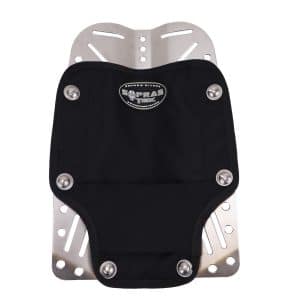
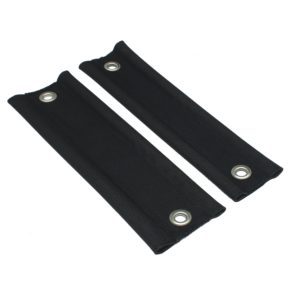
BCD accessories cover the functional add-ons that refine and extend a backplate and wing system beyond its basic configuration — weight pockets for trim ballast integration, equipment pockets for SMBs and slates, inflator and dump valve mechanisms for BCD maintenance and upgrades, and miscellaneous mounting components. These are not cosmetic add-ons; each item in this category addresses a specific configuration requirement in technical diving.
Weight Pockets and Trim Ballast in Technical Diving
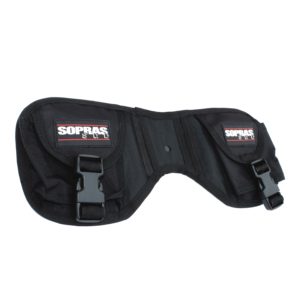
In a correctly configured BP/W system, lead weight is distributed for trim, not just buoyancy. A diver who is buoyancy-neutral but feet-heavy will still hover at an angle rather than flat — this increases drag, elevates gas consumption, and reduces control in overhead environments. Weight pockets allow ballast to be positioned precisely: trim weight at the lower back (butt plate pockets), lateral pockets at the hips for side-to-side balance adjustment, and integrated waist belt pockets for gross buoyancy control. The weight pocket range covers soft integrated pockets, rigid trim weight systems, and various mounting configurations for different harness geometries.
Equipment pockets provide a secure location for items that cannot be clipped to a D-ring — slates, wet notes, SMBs, reels, and spare masks are common examples. Pockets with a mesh or net outer panel (allowing equipment to drain and dry) are preferred in technical diving over closed waterproof pockets that retain water and add buoyancy unpredictably.
Inflators, Valves, and Service Components
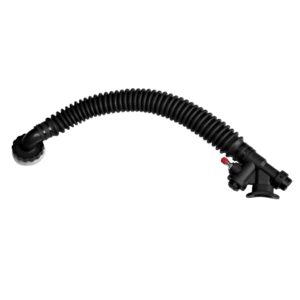
The inflator and dump valve subcategory covers replacement inflator mechanisms, LP hose connections, and over-pressure valve (OPV) assemblies for BCD servicing. The inflator is the most mechanically active component of the BCD system — it is operated on every dive and is the most common source of BCD malfunction. A free-flowing inflator (one that continuously adds gas to the wing) during ascent can cause an uncontrolled rapid ascent; an inflator that sticks in the closed position prevents buoyancy adjustment. Inflators should be serviced per the manufacturer’s schedule and replaced when they show sticking, sluggish response, or free-flow symptoms even after servicing.
What to Look For
- Weight pocket mounting compatibility with your harness — weight pockets clip, slide, or buckle onto the harness webbing or a dedicated mounting point on the backplate. Verify that the mounting mechanism matches your harness webbing width and the available mounting positions before ordering. A pocket that does not sit securely will shift position during the dive and introduce unplanned trim changes.
- Ballast capacity relative to your weighting requirements — trim weight pockets for technical diving typically hold 1–3 kg per pocket. Calculate how much trim ballast you actually need (not just gross weighting) and select pockets with appropriate capacity. Overloaded pockets that are packed beyond their rated weight create mounting point stress and can detach.
- Equipment pocket access with gloves — the pocket opening mechanism (zipper, velcro, buckle) must be operable with the gloves you dive in. Velcro closures are faster but lose grip progressively with sand and sediment contamination; zippers are more secure but require more fine motor control in cold water. Test pocket access on the surface with your actual gloves before relying on it underwater.
- Inflator hose length and LP connection type — replacement inflator hoses must match the LP port size of your first stage (either standard INT or the less common alternative thread sizes used by some manufacturers). Hose length should allow the inflator to reach the left shoulder without tension while the arm is extended, but not so long that excess hose creates drag or entanglement.
- OPV rated pressure — over-pressure relief valves are rated to open at a specific pressure differential. The replacement OPV must match the original specification for your wing — fitting an OPV with a higher cracking pressure than specified creates over-inflation risk; fitting one with a lower cracking pressure results in gas loss at normal operating pressures.
Maintenance and Care
Rinse weight pockets with fresh water after each saltwater dive, removing any ballast before rinsing to allow full water penetration into the pocket interior. Lead weights corrode slowly in saltwater and deposit lead oxide residue inside the pocket — this residue can abrade the pocket lining over time. Inspect pocket zippers and closure hardware for salt accumulation and lubricate with silicone after drying. Remove trim weight from pockets between dive trips to prevent the load from stressing the mounting hardware during storage.
Service the inflator mechanism annually or whenever it shows resistance, free-flow, or failure to seal fully on the deflate button. The inflator contains an internal spring, o-rings, and a valve seat — all of these components are available as a service kit and can be replaced without replacing the entire inflator body. After servicing, test the inflator on the surface before entering the water: hold the wing inverted and check that deflate fully vents gas without the inflate button held, then add gas via the inflate button and confirm it stops adding gas immediately when released.
FAQ
Where should trim weight be positioned in a technical diving BCD?
Trim weight for a diver who is feet-heavy should be added to the lower back — butt plate weight pockets or trim pockets at the bottom of the backplate area pull the feet up toward horizontal. A diver who is head-heavy needs weight at the hips or lower front. The correct position is determined empirically in the water: enter with your full equipment configuration, achieve neutral buoyancy, and observe your natural trim angle without active fin kicking. If you are angled, add small amounts of trim weight at the appropriate position and re-evaluate.
How do I know when my BCD inflator needs servicing?
Common signs that the inflator mechanism requires service: the inflate button requires more force than usual to depress, there is a brief free-flow when the inflator hose is connected to the LP port (before the inflate button is pressed), the deflate button does not fully vent gas in a single press, or there is a hissing sound from the inflator when the system is pressurised. Any of these symptoms warrants pulling the BCD from service until the inflator is serviced or replaced — do not dive with a suspected inflator problem.
Can weight pockets be used as primary ballast or only for trim?
Weight pockets on a technical diving BCD can carry both gross ballast and trim ballast, but the total weight capacity of the mounting system should not be exceeded. Integrated weight pockets on a BP/W harness are not designed to carry the same loads as a dedicated weight belt — they are typically rated for 2–4 kg per pocket. Divers who require significant ballast (more than 8–10 kg total) should use a dedicated weight belt for the majority of the load and reserve the BCD pockets for trim-specific placement.
Is a quick-release weight pocket necessary for technical diving?
Quick-release weight pockets (where a single pull jettisons the ballast) are standard in recreational diving as an emergency buoyancy measure. In technical diving, the need for emergency weight jettison is considered less critical because the drysuit provides an independent buoyancy source and the diver’s equipment configuration is designed with multiple redundant systems. Many technical divers prefer fixed-attachment weight pockets without quick-release mechanisms, as these are more secure and cannot be accidentally dropped. However, weight pocket design is ultimately a personal configuration decision — quick-release pockets are not prohibited in technical diving.
What is the difference between an equipment pocket and a cargo pouch?
An equipment pocket typically mounts directly onto the BCD harness or backplate and is designed for items used on most dives — slates, SMBs, spare masks, or cutting tools. A cargo pouch (as found in the Sidemount category) is a larger, often detachable bag designed to carry bulkier items that do not fit in a standard pocket. The distinction is primarily one of size and mounting method. For backmount diving, equipment pockets integrated into the BCD harness are the standard; for sidemount diving, dedicated cargo pouches that attach to the harness chest are more common due to the different D-ring placement in sidemount geometry.