Showing 1–12 of 22 results
The backplate is the structural core of any BP/W system — a rigid panel that sits against the diver’s back, distributes cylinder weight across the torso, and provides the mounting points for the harness webbing and wing. Material determines both system weight and buoyancy contribution, and the choice between aluminium, stainless steel, carbon fibre, and plastic/carbon composite is the first decision in configuring a technical diving BCD. All plates here use standard mounting geometry compatible with the harness and wing components in the system.
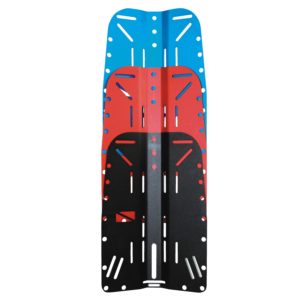
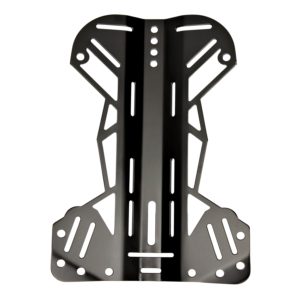
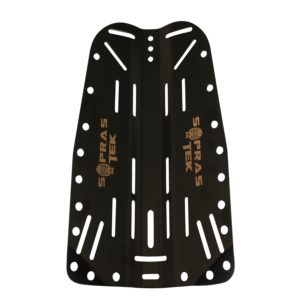
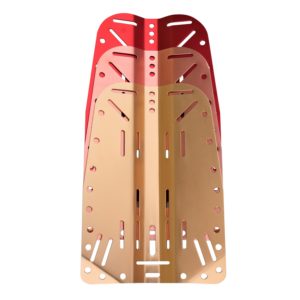
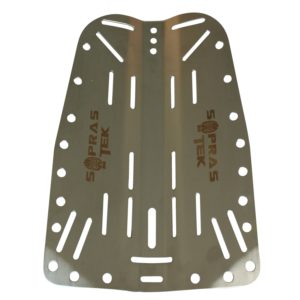
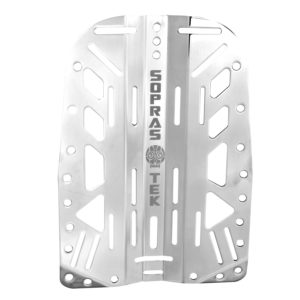
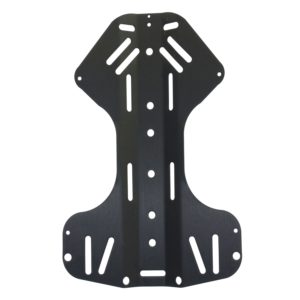
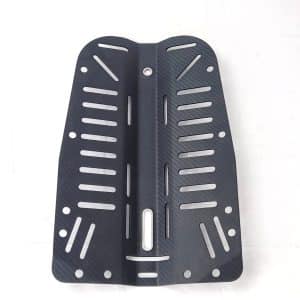
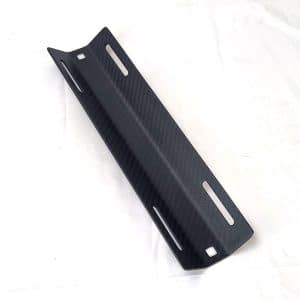
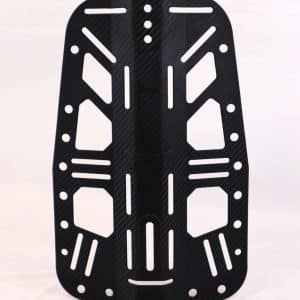
Plate Material and Its Effect on System Buoyancy
Backplate material selection is not an aesthetic choice — it directly affects how much lead ballast the diver needs to carry and how the overall system balances in the water. A stainless steel plate (Back plate SS natural, Back plate SS black, Back plate S.S. 2mm polished) typically weighs 2–3 kg depending on thickness, providing significant negative buoyancy that offsets the lift from a thick drysuit undersuit. Divers in cold water with a drysuit frequently find that a steel plate eliminates the need for a separate weight belt entirely, or substantially reduces the amount of lead required.
An aluminium plate (Alu backplate, ALU plate ergo, Back plate ALU black, Back plate ALU coloured, Back plate ALU natural, Backplate black anodized ALU) weighs approximately 0.8–1.2 kg and contributes minimal buoyancy offset. For warm-water diving in a thin wetsuit or rashguard where the diver is already close to neutral, the aluminium plate avoids over-weighting the system. It is also the standard choice for travel, where airline baggage weight limits make a 3 kg steel plate a significant penalty.
The Plastic/Carbon fiber plate and Carbon back plate represent the lightest end of the range — structurally rigid and lighter than aluminium, with near-zero buoyancy contribution. These are used in configurations where minimising system weight is a priority and the diver’s suit and cylinder selection do not require the buoyancy offset of a metal plate.
Plate Geometry and Sizing
Standard rectangular plates cover the majority of body types, but plate length is a factor for divers at the extremes of the size range. A plate that extends below the diver’s lumbar region prevents arching the back, which restricts the diver’s ability to achieve proper horizontal trim. Some plates in this range — including the ALU plate ergo and ergo variants — use a contoured or H-cut geometry that reduces material at the lower section without compromising structural integrity at the shoulder and waist attachment points. The Carbon single tank adapter is a separate component that mounts to a backplate and provides a cam band slot for single-cylinder backmount use without a full single tank adapter plate.
What to Look For
- Material relative to exposure suit — stainless steel for drysuit and cold-water diving where suit buoyancy must be offset; aluminium for warm water and travel; carbon or plastic/carbon composite where weight minimisation is the primary concern and buoyancy offset is not needed.
- Plate dimensions vs. torso length — the plate should end at or above the diver’s lumbar curve. A plate that is too long prevents back-arching and restricts trim adjustment. If your torso is shorter than average, check the plate dimensions against your back measurement before ordering.
- Harness webbing slots — all plates use webbing slots at the shoulder and waist positions, but slot width and position affects how harness webbing threads and sits against the body. Verify that the plate’s slot configuration is compatible with the harness webbing width (standard 50 mm / 2 inch) and routing pattern you intend to use.
- Single tank adapter compatibility — if you plan to use the plate on a single cylinder without a full STA plate, verify that the plate accepts a cam band slot or that a compatible single tank adapter is available. The Carbon single tank adapter is designed for this use on carbon plate setups.
- Finish and corrosion protection — polished stainless steel resists corrosion through surface finish; anodised aluminium (Backplate black anodized ALU) provides a harder oxide layer. Standard aluminium plates should be inspected annually for pitting, particularly at webbing slot edges where mechanical wear breaks the natural oxide layer and exposes the base metal to saltwater.
Maintenance and Care
Rinse all plates with fresh water after saltwater use, paying attention to the webbing slot channels where salt deposits in the narrow gaps and is difficult to dislodge with surface rinsing alone. Soak the plate in fresh water for 15–20 minutes after intensive saltwater use to fully dissolve salt from slot interiors.
Stainless steel plates develop surface rust staining at scratches and handling marks over time — this is surface oxidation, not structural corrosion, and can be removed with a non-abrasive stainless steel cleaner. Inspect the plate edges for burrs or sharp points that could abrade harness webbing over time. Any deep pitting or cracking in a steel plate at the webbing slots or attachment holes warrants replacement.
Aluminium plates should not be cleaned with alkaline or chlorinated cleaners, which strip the oxide layer and accelerate corrosion. Rinse with fresh water, dry completely, and store away from prolonged salt air exposure between dive trips. Check anodised surfaces annually for chipping or flaking — damaged anodising should be addressed before the underlying aluminium is exposed to saltwater.
FAQ
What weight difference can I expect between a stainless steel and aluminium backplate?
A standard stainless steel plate (2 mm thickness, standard size) weighs approximately 2.5–3 kg. The polished 2mm SS plate and similar variants fall in this range. Standard aluminium plates weigh 0.8–1.2 kg depending on alloy and geometry. The practical difference in required lead ballast is roughly equal to this weight difference — switching from a steel to an aluminium plate in the same diving conditions typically requires adding 1.5–2 kg of lead to maintain equivalent weighting.
Is a carbon or plastic/carbon backplate structurally adequate for technical diving?
The Plastic/Carbon fiber plate and Carbon back plate are engineered for technical diving loads — the carbon fibre reinforcement provides rigidity and strength adequate for carrying double cylinders and the associated equipment weight. The weight saving compared to aluminium (typically 0.3–0.5 kg) is most relevant for travel and sidemount applications where total system weight is a priority. These plates are not a buoyancy compromise — they are a weight engineering decision for divers whose weighting does not benefit from the negative buoyancy of a metal plate.
Can I use the same backplate for single tank and doubles diving?
Yes — the backplate itself is configuration-neutral. What changes between single and doubles use is the wing bladder (singles vs. doubles capacity), the single tank adapter if no STA is part of the plate, and potentially the harness fit if cylinder width differs significantly. The plate geometry remains constant. You can run a single cylinder on a standard backplate by adding a cam band slot adapter (such as the Carbon single tank adapter) and fitting a singles-capacity wing.
What does “ergo” geometry mean in the ALU plate ergo?
The ergonomic plate geometry refers to a modified shape — typically a contoured lower section, angled slot positions, or reduced material at the lumbar area — designed to accommodate a wider range of torso shapes and improve comfort over extended dives. The standard rectangular plate geometry is mechanically simpler; the ergo variant is intended for divers who find the standard plate cuts into the lower back during long dives or when diving in a drysuit with a thick undersuit that changes the back profile.
How often should a backplate be inspected or replaced?
Backplates do not have a fixed service life in the same way that bladders or harness webbing do — a well-maintained plate can last indefinitely. Annual inspection for structural integrity is sufficient: check webbing slots for sharp edges, inspect bolt holes for elongation or cracking, and verify that the plate is not warped or bent from impact loading. A plate that has been involved in a significant impact (cylinder falling on it, major collision) should be inspected for concealed cracking before further use. There is no routine replacement interval — replace when inspection reveals structural compromise.