Showing 1–12 of 15 results
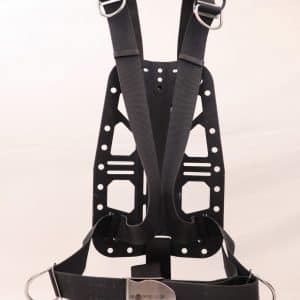
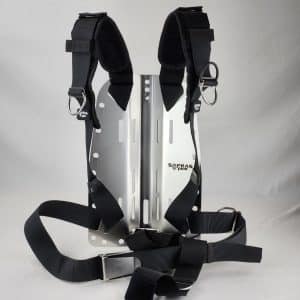
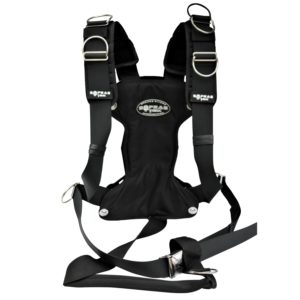
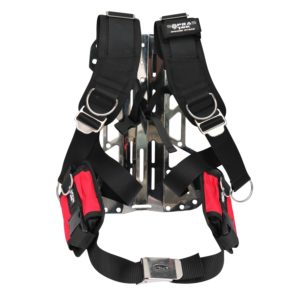
The harness is what connects the backplate and wing to the diver’s body. In technical diving, the continuous-webbing DIR harness with a crotch strap is the established standard — a single piece of 50 mm nylon webbing that provides infinite adjustability, no failure-prone buckles, and a secure fit regardless of exposure suit thickness. This category covers the full range from the bare-bones Harness DIR to padded, ergonomic, and modular configurations suited to different body types, equipment setups, and diving styles.
DIR Harness vs. Adjustable and Padded Systems
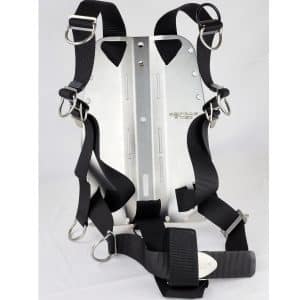
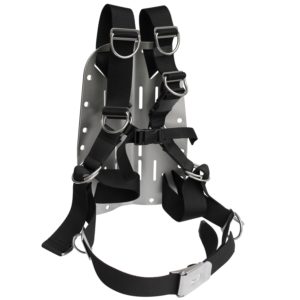
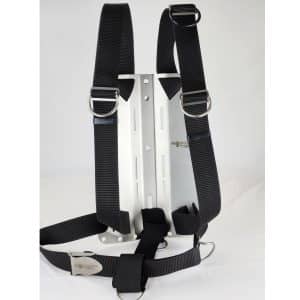
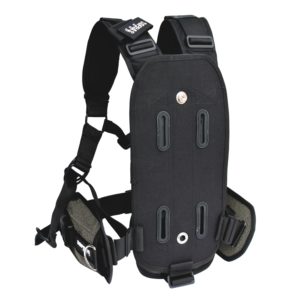
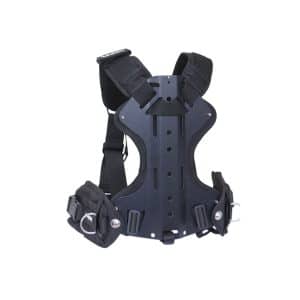
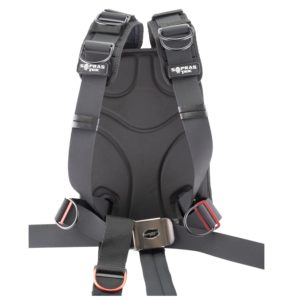
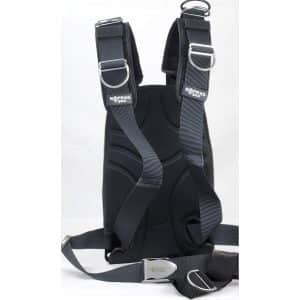
The Harness DIR series — including variants on aluminium and stainless steel plates, with hard webbing, with soft shoulder padding (Harness DIR with soft padding on shoulder, 24010SA), and on plastic/carbon fibre plate — all follow the same principle: a single continuous length of 50 mm webbing threaded through the backplate, with a separate crotch strap. There are no waist buckles, no chest buckles, and no quick-releases. The system is fitted once for a specific exposure suit and re-threaded if suit thickness changes significantly.
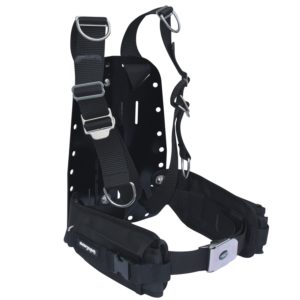
The Harness ADJ and Harness detachable introduce adjustable buckles at the waist or shoulder, allowing faster on/off and size adjustment without re-threading the webbing. These are appropriate for instructors and guides who share equipment across multiple students, or for divers who alternate between significantly different exposure suits. The Harness cool takes this further with a padded back panel for comfort on longer dives, available on both aluminium and stainless steel plates.
The Harness ergo and Harness modular represent the ergonomic end of the range — anatomically shaped shoulder straps, load distribution optimised for heavier doubles setups, and in the modular version, the ability to reconfigure attachment points. The Harness Ultra light hard and Harness soft serve the lightweight sidemount and travel segment, where system weight needs to be minimised without sacrificing structural integrity.
Sizing and Fitting a Technical Diving Harness
A correctly fitted harness positions the backplate flat against the diver’s back, with the shoulder straps running parallel to the spine without riding inward toward the neck. The waist belt sits at the hip bones, not the waist, and is snug enough that the entire system moves with the diver’s body rather than shifting independently. The crotch strap runs between the legs and attaches to the waist belt or backplate bottom — without it, the entire system rides up during descent and in the horizontal position, creating a shifting centre of gravity that disrupts trim.
Harnesses with padding — the Harness with padding on back and shoulders variants with aluminium plates and either SS or ALU D-rings — add material thickness at the shoulder contact points. This affects sizing: a harness fitted correctly over a drysuit undersuit may be too loose over a 3 mm wetsuit. Divers who dive in radically different exposure suit thicknesses across seasons should consider an ADJ harness or allow for re-threading of the webbing.
What to Look For
- Harness geometry — continuous webbing vs. buckle systems — a DIR-style continuous webbing harness has no waist or chest quick-releases, which minimises failure points and maintains a consistent, snag-free profile. Adjustable and detachable harnesses are more convenient but introduce additional hardware that must be inspected and maintained. For purely technical diving, the simplest harness that fits correctly is the most reliable.
- D-ring material and placement — stainless steel D-rings are the standard for load-bearing attachment. Aluminium D-rings are lighter but softer and more susceptible to deformation under shock loads. D-ring placement on the chest and shoulders should allow bolt snap attachment and detachment with one hand while wearing gloves — verify this with your actual gloves before committing to a configuration.
- Backplate compatibility — harnesses are typically sold with a backplate included in this category. Confirm the plate material (aluminium, stainless steel, plastic/carbon) matches your diving context before ordering. A stainless steel plate with a DIR harness is the standard cold-water technical diving baseline; aluminium on a padded harness is more common in warm-water and travel contexts.
- Crotch strap inclusion — all technical diving harnesses should include a crotch strap. Verify that it is included with the harness and that the adjustment range covers your body dimensions in the exposure suit you intend to use. A crotch strap that is too short pulls the waist belt forward; one that is too long allows the backplate to ride up.
- Webbing material and UV resistance — 50 mm nylon webbing is standard; some harnesses use stiffer polyester webbing for reduced stretch under load. Inspect webbing annually for UV fading and check that the stitching at load-bearing junctions (shoulder-to-backplate and waist connections) shows no fraying or thread separation.
Maintenance and Care
Rinse harness webbing thoroughly with fresh water after every saltwater dive. Pay particular attention to the backplate webbing slots where salt accumulates in the woven structure and is not fully removed by surface rinsing alone — soak the webbing in fresh water for 15–20 minutes for complete salt removal after intensive saltwater use.
Inspect all stitching, particularly at the crotch strap junction and the backplate threading points, which are the highest-stress locations. Any thread separation or fraying at these points warrants replacement of the harness or re-stitching by a qualified service centre. Do not attempt to re-sew load-bearing webbing junctions with consumer sewing equipment — the stitch type and thread specification are critical to the rated load capacity.
Metal buckles on ADJ and detachable harnesses should be checked for corrosion at the hinge points and spring mechanisms. Rinse and dry thoroughly, then apply a thin coat of silicone lubricant to moving parts. D-ring welds should be visually inspected for surface cracking — any ring showing a crack in the weld zone must be replaced before the next dive.
FAQ
Why does a technical diving harness use continuous webbing instead of buckles?
A continuous single-piece webbing harness has no quick-release mechanisms at the waist or shoulders — there is nothing to accidentally open, nothing that can fatigue and fail, and no buckle that can be snagged by a line or structure. The trade-off is that fitting requires more initial setup time: the webbing must be threaded through the plate and adjusted specifically for the diver’s body dimensions and exposure suit. Once fitted correctly, the system maintains a consistent, secure geometry without adjustment on every dive.
What is the difference between Harness DIR and Harness ADJ?
The Harness DIR uses the continuous webbing configuration — no waist buckle, fixed routing through the backplate, crotch strap integrated into the webbing system. The Harness ADJ introduces adjustable buckles that allow the waist size to be changed without re-threading, making it easier to share the system between divers or adapt to different suit thicknesses between dive seasons. The ADJ configuration is more convenient; the DIR configuration is more minimal and reliable for dedicated technical use.
Does the harness include a backplate?
Most harnesses in this category are sold as harness-and-plate combinations — the product listing specifies whether the plate is aluminium or stainless steel and whether any D-rings are included. Standalone harness webbing without a plate is available in some cases for divers who already own a compatible backplate. Check the product specification for what is included before ordering, as pricing varies between bare-harness and plate-plus-harness configurations.
Is a padded harness appropriate for technical diving?
Padding on a technical diving harness is a comfort feature, not a structural one. Harnesses with back and shoulder padding — such as the Harness with padding on back and shoulders variants — are used by divers who spend long periods in the water on extended technical dives or liveaboard trips where cumulative harness pressure on shoulders becomes a factor. The padding does not affect the buoyancy, trim, or reliability of the system. The choice between padded and unpadded is a personal preference based on dive duration and individual comfort.
How do I know if my harness fits correctly?
The backplate should sit flat against your back with the shoulder straps parallel and the waist belt resting on your hip bones, not riding up toward your waist. The crotch strap should be snug enough to prevent the backplate from rising toward the shoulders when you enter a horizontal position — if the plate shifts significantly as you change body angle, the crotch strap needs shortening. D-rings should sit in a position accessible with either hand without excessive arm movement, and the inflator hose should reach your left shoulder without tension.