Showing all 5 results
The Sopras Tek boot range covers five models for use over dry suit neoprene socks or as replacement integrated boots. Options include standard rubber boots in two variants, a canvas construction for reduced weight and comfort, and two higher-specification models designed as replacement integrated boots for suited divers. Sizes cover EU 39–46 (UK 6–13) depending on the model.
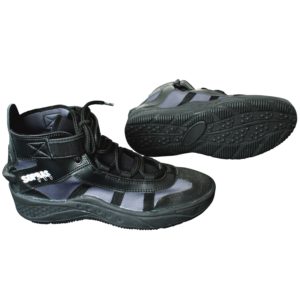
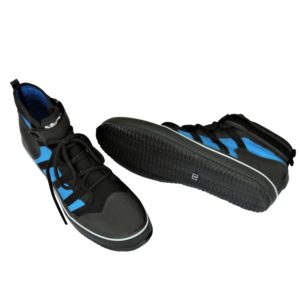
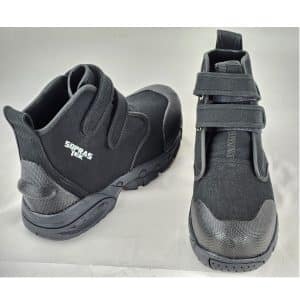
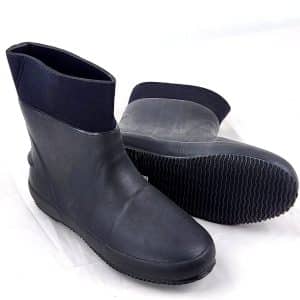
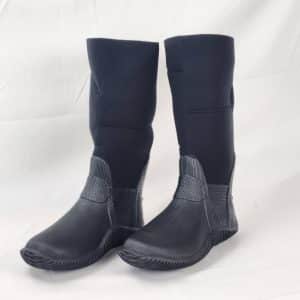
Dry Suit Boots
Dry suit boots serve two purposes: thermal protection for the feet and a stable, grippy sole for entry and exit. They are worn over dry suit neoprene socks (for suits with neoprene sock foot) or directly as replacement integrated boots (for suits with a dry ankle seal where the boot is part of the seal system). The choice of boot depends on which foot configuration your suit uses — confirm before ordering.
Boot Constructions
The standard rubber boots (15350 at 55 €, 15360 on sale at 46 €) are low-profile, flexible rubber construction for use over neoprene socks. They provide a non-slip sole for boat decks and gentle shore entries. The canvas boot (95 €) uses a textile upper for reduced weight and improved comfort when walking extended distances in the suit — useful for shore divers who walk to the entry point in full kit. The Dry suit boots (109700, 110 €) and Replacement boots (109800, 125 €) are more robust constructions appropriate as replacement integrated boots for suited divers, with higher ankle support and a more durable sole suited to rockier entries.
What to Look For
- Suit compatibility: Boots worn over neoprene socks require a soft, flexible sole and low profile to fit under a fin. Integrated replacement boots must match the ankle seal diameter and mounting of the specific suit model. Check the product page notes and contact Sopras Tek service if unsure.
- Entry type: Boat diving with short walks — standard rubber. Shore diving with rocky entries — canvas or the higher-spec 109700/109800. Long walks to entry — canvas for comfort. Cave diving with gear carries — canvas or rigid sole for stability on slippery surfaces.
- Fin compatibility: Ensure the boot profile fits inside your fin foot pocket with room for the sock or suit material. Try the combination before a critical dive.
Maintenance and Care
Rinse boots with fresh water after every dive and allow them to dry completely before storage. Salt crystallisation inside the boot can degrade the liner and sole bonding over time if not rinsed out. Rubber soles benefit from occasional application of a rubber conditioner to prevent drying and cracking. Canvas boots should be dried thoroughly to prevent mould growth in the textile layers. Store boots dry and away from UV exposure, which degrades rubber soles.
FAQ
What is the difference between 15350 and 15360 boots?
Both are standard rubber boots for use over neoprene socks, but they differ in construction detail — the 15360 is currently on sale and covers sizes 9–12 (EU), while the 15350 covers a wider size range (5–13). Check the size availability for your foot size when choosing between them.
Can I use these boots with integrated bootie suits?
Boots over integrated rubber booties are not typically worn — the bootie is the integral foot of the suit. These boots are designed for use with suits that have neoprene socks (flexible foot) or as replacement integrated boots (109700/109800) for suits with a dry ankle seal and detachable boot. If your suit has rubber booties, you would wear fins directly over them, not separate boots.