Sopras Tek supplies a focused range of scuba regulators and gauges built for technical and demanding recreational diving. The selection covers complete 1st and 2nd stage systems, standalone first stages in balanced and unbalanced configurations, octopus regulators, sidemount and twin-tank sets, pressure gauges up to 450 bar and 5000 psi, LP and HP hoses in multiple materials, and the full servicing and parts ecosystem to support them.
For more regulators and its accesories visit SoprasSub sites.
-
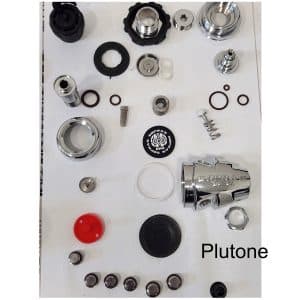
Replacement parts (3)
-
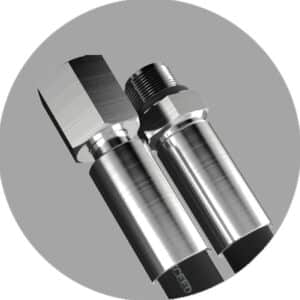
HP hoses (5)
-
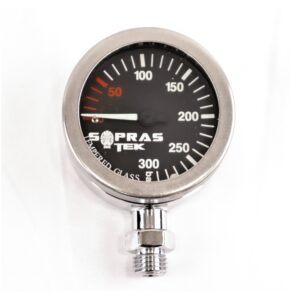
Pressure gauges, compass (7)
-
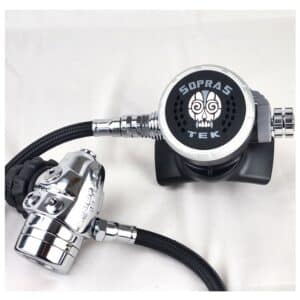
Complete sets (1st+2nd stage) (5)
-
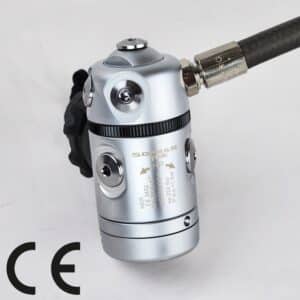
First stages (13)
-
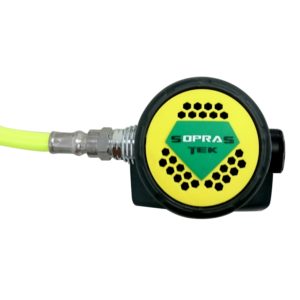
Octopuses (3)
-
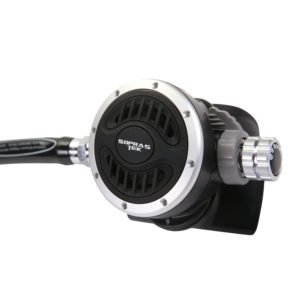
Second stages (6)
-
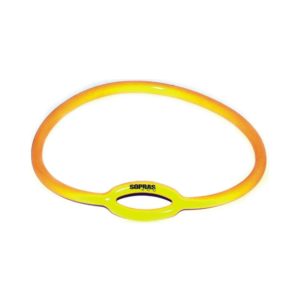
Accessories (9)
-
Regulators Hoses (4)
-
Regulator servicing (11)
Technical and Recreational Regulator Systems
A scuba regulator reduces cylinder pressure in two stages. The first stage drops working pressure from cylinder pressure (200–300 bar) to an intermediate pressure of roughly 7–10 bar above ambient. The second stage reduces intermediate pressure to ambient on demand, delivering gas at the exact pressure required to breathe at depth. This two-stage architecture is shared across recreational and technical systems; what differentiates technical regulators is port count, cold-water rated internals, and the ability to be configured for multi-cylinder setups.
First Stages
Balanced and unbalanced first stages for backmount, sidemount, and argon inflation systems. DIN and INT options across Mercurio ICE, Giove ICE, Plutone, Minerva, and Diana series.
Second Stages
Balanced adjustable and unbalanced second stages including Venere, Saturno, Andromeda, and Oxygen Special Edition. Paired with any Sopras Tek first stage or sold separately.
Octopuses
Alternate air source second stages — Octopus 2020, Diamond, and Special Edition — for buddy-assist gas sharing in technical and recreational configurations.
Complete Sets (1st+2nd Stage)
Pre-matched regulator pairs for backmount, sidemount, and twin-tank diving. Includes Mercurio ICE/Venere, Plutone ICE/Venere, Sidemount set, Twin tanks set, and Oxygen deco regulator.
Pressure Gauges, Compass
TEK-series SPGs in 300 bar, 450 bar/oxygen, and 5000 psi, plus compass with bungee mount and modular gauge head. Designed for sidemount and backmount hose configurations.
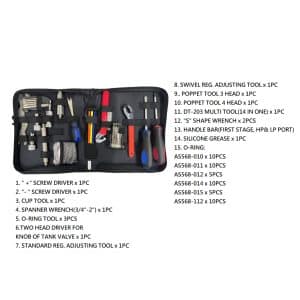
Regulator Servicing
Official service kits, tools, lubricants, and intermediate pressure gauges for balanced and unbalanced regulator maintenance. Includes Christo Lube OXY-compatible grease and a regulator service course.
Replacement Parts
Model-specific service kits for 1st and 2nd stage overhauls — Diana, Minerva, Plutone, and Venere variants — plus a General Service Kit covering common components across multiple models.
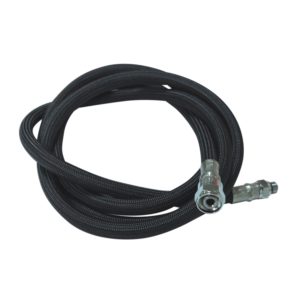
Regulators Hoses
LP second stage hoses in braided stainless, Tek braided, Classic NBR, and Smooth configurations. Lengths from 62 to 210 cm for backmount and sidemount routing.
HP Hoses
High-pressure hoses for SPG connections — rubber, braided, and ACCPur polymer — in 15 to 100 cm lengths, plus an HP swivel to prevent hose torque at the gauge port.
Accessories
Regulator accessories including necklaces, carry bags, anatomic mouthpieces, inflator adapters, on/off valves, and OPV (over-pressure valve) for 1st stage intermediate circuits.
Balanced vs. Unbalanced First Stages
The core distinction in first stage design is whether intermediate pressure varies with tank pressure. An unbalanced first stage — such as the Diana series — delivers breathing effort that increases slightly as tank pressure drops. For single tank recreational dives this is acceptable; for technical dives with long run times and high gas consumption it can introduce perceptible effort as cylinders empty. A balanced first stage — Mercurio ICE, Giove ICE, Plutone — maintains constant intermediate pressure regardless of cylinder fill level, which is the standard requirement for technical diving configurations including sidemount, manifolded doubles, and deco bottles.
ICE-rated variants (Mercurio ICE, Giove ICE, Plutone ICE) add cold-water sealing and surface treatments to function reliably in water temperatures below 10°C where unprotected internals risk freezing. Both chrome satin and Duratek black coating versions are available across the ICE balanced range.
What to Look For
- DIN vs. INT connection: DIN 200 and DIN 300 connections screw directly into the cylinder valve, providing a more secure seal preferred for technical diving. INT (A-clamp/yoke) is common in recreational contexts. All Sopras Tek first stages are DIN with optional INT adapters where available.
- Port configuration: Technical setups typically require multiple LP ports for second stage, BCD inflator, drysuit hose, and occasionally a stage regulator. Count the ports on any first stage and ensure they match your hose routing plan — balanced first stages in this range provide 4–5 LP and 1–2 HP ports.
- Intermediate pressure stability: Check whether the first stage is balanced or unbalanced for your intended dive profile. Balanced designs are mandatory for multi-cylinder and extended range diving where consistent breathing performance throughout the dive is critical.
- Hose material and length: For sidemount, 100–105 cm LP hoses route cleanly to second stages clipped at the chest. Backmount primary hoses run 60–75 cm; long hose configurations for DIR-style routing require 200 cm. NBR, smooth urethane, and braided stainless have different flexibility, abrasion resistance, and temperature performance characteristics.
- Service interval compliance: Balanced regulators used in technical diving should be serviced annually or every 100 dives. Ensure you can source model-specific service kits — Sopras Tek stocks kits for Diana, Plutone, Minerva, Mercurio, Giove, and Venere directly.
Maintenance and Care
After every dive, flush the regulator in fresh water with the first stage dust cap installed to prevent water ingress into the inlet port. Do not depress the purge button during rinsing — this forces water into the second stage internals. Allow the regulator to dry completely before bagging; storing it damp promotes corrosion in the HP seat area. Hang second stages without coiling hoses tightly, which fatigues hose cores over time. For cold-water diving, avoid thermal shock by not running hot water over cold regulator bodies immediately after surfacing. Annual service using model-specific kits, oxygen-compatible lubricant such as Christo Lube MCG 111, and calibrated adjustment tools keeps intermediate pressure within spec and breathing effort predictable across the depth range.
FAQ
What is the difference between a balanced and unbalanced first stage?
An unbalanced first stage delivers intermediate pressure that varies with cylinder pressure — as the tank empties, breathing effort increases slightly. A balanced first stage maintains constant intermediate pressure regardless of how full or empty the cylinder is. For technical diving, where dives are longer and cylinders may be run quite low, balanced performance is the standard requirement. For short recreational dives on full cylinders the difference is minor.
Are Sopras Tek regulators suitable for cold water diving?
The ICE-rated variants — Mercurio ICE, Giove ICE, Plutone ICE — are specifically designed for cold water below 10°C. They feature sealed first stage internals and surface treatments that prevent freezing of the demand valve mechanism. For diving in temperate or warm water, standard non-ICE models perform normally. If you dive regularly in cold conditions, the ICE designation is worth specifying when selecting a model.
What hose length should I use for a sidemount configuration?
For sidemount diving, second stage hoses of 100–105 cm are typical, routing from the first stage on the cylinder valve to a second stage clipped at chest level. The Regulators Hoses category includes Braided Tek hoses in 62–105 cm lengths suitable for this purpose. For deco bottle regs clipped off to the side, 75 cm is common. Exact length depends on your specific clipping arrangement and body size.
How often should I service my regulator?
The standard recommendation for technical diving regulators is annual service or every 100 dives, whichever comes first. Balanced regulators used for cold water or mixed gas diving should not exceed annual service intervals. Recreational regulators used infrequently can sometimes extend to two years, but manufacturer service schedules take precedence. Sopras Tek stocks model-specific service kits and tools for all current regulator models.
Can I use Sopras Tek regulators with oxygen-enriched gas or pure oxygen?
The TEK pressure gauge 450bar/oxygen and Oxygen deco regulator set are specifically prepared for high-oxygen service. Standard regulators require oxygen cleaning and oxygen-compatible lubricant before use with gas mixes above 40% O₂. Christo Lube MCG 111 (available in 5g and 60g sizes) is the appropriate oxygen-compatible lubricant for servicing any regulator intended for nitrox or oxygen service. Always verify oxygen compatibility of all components — hoses, o-rings, lubricants — before use with elevated oxygen fractions.