Sopras Tek first stages cover balanced piston and balanced diaphragm designs for technical and demanding recreational diving. The range includes the ICE-rated Mercurio, Giove, and Plutone balanced series, the piston-balanced Minerva, and the Diana unbalanced series, all in DIN configuration with chrome satin or Duratek black coating finishes. An Argon first stage — with and without OPV — is available for drysuit inflation circuits.
For more stages please check SoprasSub.
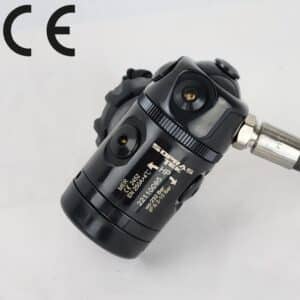
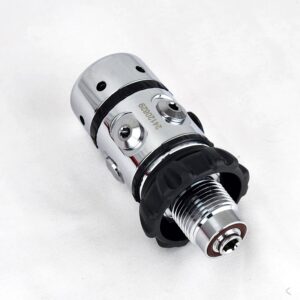
Balanced and Unbalanced First Stage Designs
The first stage of a scuba regulator has one function: reduce high-pressure cylinder gas to a stable intermediate pressure, typically 7–10 bar above ambient, that the second stage can reduce further to breathable ambient pressure on demand. The two primary internal architectures are piston and diaphragm. Piston designs are simpler, have fewer moving parts, and are easier to service; diaphragm designs isolate the mechanism from the water entirely, making them better suited for cold or contaminated water.
Within each architecture, the further distinction is balanced vs. unbalanced. The Sopras Tek first stage range provides both, split across two dedicated subcategories.
First Stages Balanced
Nine balanced first stages across the Mercurio ICE, Giove ICE, Plutone, and Minerva series. Chrome satin and Duratek black coating finishes; DIN 200/300 in standard and ICE cold-water configurations.
First Stages Unbalanced
Diana series in bright chrome and Duratek black, plus Argon first stages (with and without OPV) for drysuit inflation circuits. DIN configuration throughout.
ICE-Rated Cold Water Performance
The Mercurio ICE, Giove ICE, and Plutone ICE variants carry cold-water ratings for use below 10°C. In cold water, standard regulator internals risk freezing when moisture-laden gas expands rapidly through the demand valve — a phenomenon that can cause free-flow or complete failure at depth. ICE-rated models address this with sealed environmental chambers that prevent water contact with the internal mechanism, and surface treatments — satin chrome or Duratek black Duranodic anodising — that resist corrosion in salt water and cold environments.
The Argon First Stage
The 1.St Argon (and 1.St Argon + OPV) is a dedicated first stage for drysuit argon inflation systems. Argon is used in preference to air for drysuit inflation because of its lower thermal conductivity, which improves thermal insulation at depth. An argon system consists of a small dedicated cylinder (typically 2–3l), a separate first stage, and a low-pressure hose to the suit inlet. The OPV (over-pressure valve) variant includes an automatic vent to prevent over-inflation of the inflation cylinder during transport or storage. These are not regulators for breathing gas — they are inflation-only systems.
What to Look For
- Balanced vs. unbalanced: For technical diving — manifolded doubles, sidemount, extended range — choose balanced. For single-tank recreational diving with full cylinders throughout the dive, unbalanced is functional and more straightforward to service.
- ICE rating for cold water: If you regularly dive below 10°C, the ICE-rated Mercurio, Giove, and Plutone variants provide sealed internals and cold-water sealing. Standard variants are suitable for temperate and warm water.
- DIN rating: All models are DIN. DIN 200 is standard; DIN 300 handles higher-pressure cylinders used in technical diving. Verify your cylinder valve DIN rating before ordering — many technical cylinders run 300 bar DIN.
- Port count: Technical configurations require multiple LP ports for second stage, octopus, BCD/wing inflator, and drysuit hose. Count ports on the specific model; balanced technical first stages in this range provide 4 LP + 2 HP as a typical configuration.
- Finish durability: Duratek black Duranodic anodising is harder-wearing than chrome in abrasive environments and on alloy bodies. Chrome satin is preferred aesthetically by some divers. Both finishes are available across balanced ICE models.
Maintenance and Care
First stages should be rinsed in fresh water with the DIN inlet cap installed to protect the HP seat from contamination. Do not submerge the first stage with the DIN cap off — water entry into the inlet damages the HP seat and filter. Annual service using model-specific kits replaces the HP seat, diaphragm or piston o-rings, IP seat, and spring as appropriate. Intermediate pressure should be verified with a calibrated intermediate pressure gauge (available separately) after any service. For oxygen-service or high-O₂ nitrox, all internal lubricants must be replaced with oxygen-compatible grease such as Christo Lube MCG 111 before the first dive.
FAQ
What intermediate pressure do Sopras Tek first stages deliver?
Balanced first stages in the Sopras Tek range deliver a nominal intermediate pressure in the 8–10 bar above ambient range. Exact factory set-point varies by model and can be adjusted within a service range using the appropriate flat or hexagonal adjustment tool. An intermediate pressure gauge is required to verify and set IP during service. The service manuals for each model specify the target IP and acceptable tolerance.
Can I use a Sopras Tek balanced first stage for sidemount diving?
Yes. Balanced first stages across the Mercurio ICE, Giove ICE, and Plutone series are used in sidemount configurations. The DIN fitting connects directly to side-mounted cylinder valves. For sidemount, the Sidemount complete set (in the Complete Sets category) provides a pre-matched pair, but individual first stages can also be paired with appropriate second stages and routed with 100–105 cm LP hoses.
What is the difference between Mercurio ICE, Giove ICE, and Plutone?
All three are balanced first stages. The Plutone series uses a balanced piston mechanism and is the entry point of the balanced range. Mercurio ICE and Giove ICE are sealed cold-water rated designs with environmental chamber protection. The mechanical differences relate to internal geometry and port configuration; all share DIN connection and are available in satin chrome and Duratek black finishes. Price differentials reflect the cold-water certification and additional sealing on the ICE models.
Is the Diana suitable for technical diving?
The Diana is an unbalanced DIN first stage. For technical diving — extended bottom times, multi-cylinder systems, or gas mixes run to lower fractions — a balanced first stage is the appropriate choice. The Diana is well suited for recreational single-tank diving and as a budget-friendly learning platform. It is not typically specified for doubles manifold, sidemount technical, or extended range configurations where consistent intermediate pressure through the dive matters.
What is the Argon first stage used for?
The Argon first stage is exclusively for drysuit argon inflation systems. It connects to a small dedicated argon cylinder worn separately from the breathing gas supply. Argon has lower thermal conductivity than air, making it the preferred drysuit inflation gas for cold water diving. The OPV variant (1.St Argon + OPV) adds an over-pressure valve to prevent the small argon cylinder from being pressurised beyond safe limits during transport. These regulators are not rated for breathing gas use.