Showing all 4 results
Four LP hose product lines for second stage routing in backmount and sidemount configurations. The range covers braided stainless (standard and Tek short lengths), Classic NBR rubber, and Smooth urethane constructions, with lengths from 62 to 210 cm. All connect to standard 9/16″ UNF LP ports on Sopras Tek and compatible first stages.
For more regulators hoses please visit https://soprassub.com/product-category/hoses/regulator-hoses/
LP Hose Construction and Application
Low-pressure hoses route intermediate-pressure gas from the first stage LP ports to second stages, BCD inflators, drysuit valves, and octopus regulators. Hose construction affects flexibility, durability, weight, and temperature performance. The four hose constructions in this range serve different application requirements.
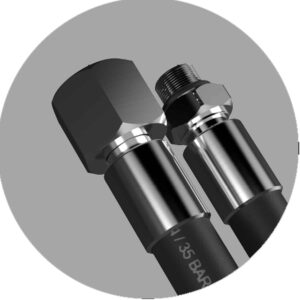
Classic NBR (nitrile rubber, SKU 900664/9) is the standard flexible hose construction. NBR has good flexibility across a wide temperature range and is compatible with air, nitrox, and standard gas mixes. Available in 62–210 cm, it covers all standard routing lengths from short BCD inflator hoses to 200 cm long-hose primary configurations. At 19–31 €, it is the most economical option.
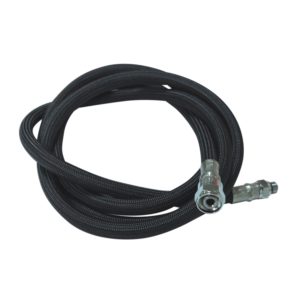
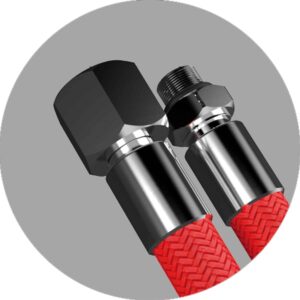
REGULATOR hoses Braided Tek (SKU 900680/704, 62–105 cm) are stainless-braided hoses in the shorter lengths primarily used for sidemount second stage routing and compact backmount setups. Braided stainless provides abrasion resistance where hoses contact cylinder hardware, webbing, or cave surfaces. The standard Regulator hose braided (SKU 900542-6, 47–52 €) provides similar braided construction in a different length range.
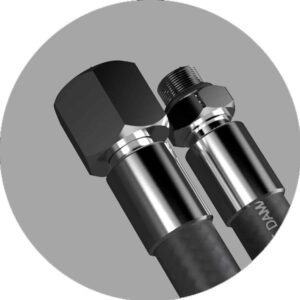
REGULATOR hoses SMOOTH (SKU 900708/40, 62–210 cm) use a smooth urethane outer cover rather than a textured or ribbed finish. Smooth hoses are lower profile, easier to route under drysuits, and produce less resistance against neoprene or drysuit fabric during movement. At 28–46 €, they occupy the mid-price tier.
Hose Length Selection
Length selection is configuration-specific. For backmount long-hose DIR configurations, the primary second stage runs on 200 cm; the backup second stage on a 60–75 cm necklace hose. For sidemount, 100–105 cm is the standard for second stages clipped at chest level. BCD/wing inflator hoses are typically 60–75 cm. Drysuit inflation hoses run 75–90 cm depending on suit inlet position. Verify your specific routing before ordering — a hose that is too short cannot be extended and one that is too long creates excessive coiling that catches on equipment.
What to Look For
- Length for configuration: Match hose length to your routing. Long-hose backmount (200 cm), sidemount primary (100–105 cm), standard backmount primary (75 cm), BCD inflator (60–75 cm), and drysuit (75–90 cm) are the common technical lengths. All are available in Classic NBR and Smooth constructions.
- Braided for abrasion resistance: In cave, wreck, or sidemount configurations where hoses contact rock, metal, or cylinder hardware frequently, braided stainless outer construction extends hose life significantly compared to rubber or urethane.
- Smooth for drysuit routing: Smooth urethane hoses are lower profile and glide more easily against drysuit material than ribbed rubber hoses. For divers routing hoses under or over a drysuit, the smooth finish reduces snagging and hose distortion from fabric pressure.
- Temperature performance: NBR maintains flexibility down to approximately -20°C, covering all recreational and technical diving temperature ranges. Smooth urethane has slightly different low-temperature flexibility; both are suitable for cold-water diving within normal diving temperature ranges.
- End fittings: All hoses use standard 9/16″ UNF LP port connections compatible with any Sopras Tek first stage and most other manufacturers’ LP ports. Verify thread compatibility if pairing with non-standard first stages.
Maintenance and Care
Inspect LP hoses before every dive for cracking, swelling, or abrasion through the outer cover. A compromised hose outer layer does not immediately mean failure, but indicates that the braided or reinforcement layer is exposed to water and salt, accelerating degradation. Replace hoses showing any damage to end fittings — the junction between the fitting and hose body is the highest-stress point and most common failure location. Rinse hoses after every dive and store without tight coiling to prevent stress fatigue at the middle of the hose. LP hose failure is generally a free-flow event rather than a catastrophic blowout, but any failure requires surfacing and equipment inspection before continuing the dive.
FAQ
What length hose for a long-hose backmount configuration?
DIR and GUE-influenced long-hose configurations use a 200 cm primary second stage hose routed from the right first stage port, under the right arm, across the chest, and presented from the left side for donation. The 200 cm length is available in Classic NBR and Smooth constructions. The backup second stage is typically on a 60–75 cm hose worn on a necklace, accessible from the diver’s neck without removing the primary regulator.
Are LP hoses gas-specific or interchangeable?
Standard LP hoses (NBR, braided, smooth) are compatible with air and nitrox mixes up to 40% O₂. For higher-fraction nitrox or oxygen service, hoses must be oxygen-compatible — NBR is generally acceptable for nitrox up to 40%; above that, oxygen-specific hose materials are required. For oxygen deco bottle routing, use the dedicated oxygen-rated hoses. Standard LP hoses used on air or recreational nitrox are fully interchangeable between LP port positions.
How often should LP hoses be replaced?
There is no fixed service life for LP hoses, but visual inspection before every dive should be standard practice. Hoses showing outer cover cracking, swelling, or damage at end fittings should be replaced immediately. For technical diving, replacing LP hoses every 3–5 years is a common guideline regardless of visible condition, as rubber and urethane compounds degrade internally over time even without visible damage. Hoses used in cold, UV-exposed, or chemical environments may need earlier replacement.
Can I use LP hoses for HP applications?
No. LP hoses are rated for intermediate pressure — the 7–10 bar above ambient pressure delivered by the first stage. They must not be connected to HP ports, which carry full cylinder pressure (200–300 bar). HP connections require dedicated HP hoses (available in the HP Hoses category) with appropriate pressure ratings and fittings. The fitting thread is the same between LP and HP in some configurations; always verify hose pressure rating and port designation before connecting.
What is the practical difference between NBR, smooth, and braided hoses?
NBR rubber is flexible, economical, and the standard choice for most applications. Braided stainless provides abrasion and kink resistance for high-wear environments — cave diving, sidemount configurations with frequent cylinder contact, and wreck diving. Smooth urethane is the lowest-profile option with a glide-friendly outer surface suited to drysuit routing and configurations where the hose runs against fabric. For a standard recreational or technical backmount setup, Classic NBR is appropriate. For sidemount in challenging environments, braided is the better specification.