Showing all 3 results
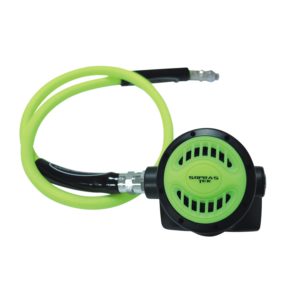
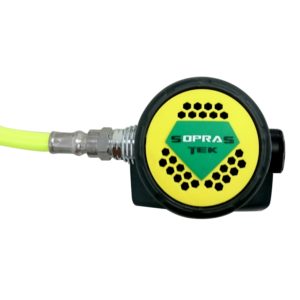
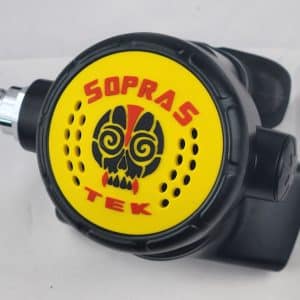
Three octopus alternate air sources based on the 2020 platform: standard, Diamond, and Special Edition. All are second stages designed for buddy gas sharing — typically configured on a longer hose and carried accessible at the front of the rig for immediate donation to a diver who has run out of or lost their primary gas supply.
The Role of the Octopus in Recreational and Technical Diving
An octopus (alternate air source, AAS) is a second regulator connected to the same first stage as the primary second stage via an additional LP port. In recreational diving, it provides a redundant breathing source for the diver and a donation source in an out-of-air emergency with a buddy. The octopus is typically configured on a longer hose — 90–100 cm — than the primary second stage, and stowed within reach at the diver’s front.
In technical diving, true redundancy is provided by fully separate cylinder and regulator systems, making the octopus less central. However, octopus stages remain common as backup second stages for single-tank technical dives, as dedicated backup sources on rebreather dives, and in recreational configurations where the diver does not carry an independent redundant system.
The Octopus 2020 Range
The Octopus 2020 and its two aesthetic variants — the Octopus 2020 Diamond and Octopus 2020 Special Edition — share the same internal mechanism at the same price point. All three are priced at 99 €. The distinction is the external trim colour and housing finish. The Special Edition uses the same black/coloured trim as the Special Edition breathing second stages, allowing a matched equipment aesthetic. The Diamond variant uses the same housing as the Venere Diamond second stage.
What to Look For
- Hose length for donation: Octopus regulators are typically run on a 90–100 cm hose to allow a second diver to breathe from it while swimming side by side with the donor. The Regulators Hoses category includes lengths suitable for octopus configuration. Avoid stowing an octopus on a hose that is too short to reach a buddy’s face without pulling either diver off balance.
- Stowage position: Octopus second stages should be accessible without searching — typically clipped or tucked in the front chest area. Bright yellow or neon trim on some octopus models aids quick identification; the standard and Diamond Octopus 2020 use a yellow or bright-coloured mouthpiece for this reason.
- Inhalation cracking effort: For an emergency donation regulator, a lower cracking effort is preferable — a stressed diver receiving an octopus needs to be able to breathe from it with minimal effort. Check that the octopus is not set to maximum resistance.
- Separate bag storage: If the octopus is used infrequently, store it in the regulator bag (available in Accessories) to prevent salt buildup in the demand valve from long dry-storage periods between dives.
- Aesthetic matching: All three Octopus 2020 variants are mechanically identical; choose the finish that matches your existing second stage for a cohesive system appearance.
Maintenance and Care
Octopus regulators require the same maintenance as primary second stages but are often neglected because they are not breathed routinely. Rinse after every dive, dry thoroughly, and service annually. A corroded or sticky demand valve in an emergency octopus is a significant safety risk. Test the purge and inhalation resistance before every dive to confirm the octopus is functional. If the octopus has not been used in more than six months, a service is advisable before relying on it in the water.
FAQ
Is an octopus necessary for technical diving?
In technical diving with fully redundant cylinder and regulator systems — manifolded doubles, sidemount with two cylinders — an octopus on the primary system is redundant to the backup second stage on the independent circuit. For single-tank technical dives or dives where the second cylinder is a stage rather than a redundant bailout, an octopus on the primary first stage provides an accessible backup. The specific configuration depends on your diving system and redundancy philosophy.
What hose should I use for an octopus?
A 90–100 cm LP hose is standard for recreational octopus configurations, long enough to reach a buddy’s face while swimming abreast. For technical configurations where the octopus is stowed more compactly and intended only for self-use as a backup, shorter hoses in the 60–75 cm range are sometimes used. The Regulators Hoses category includes LP hoses in multiple lengths across braided, NBR, and smooth materials to suit different configuration preferences.
Are all three Octopus 2020 variants mechanically the same?
Yes. The Octopus 2020, Octopus 2020 Diamond, and Octopus 2020 Special Edition use the same internal mechanism and carry the same 99 € price. The differences are purely cosmetic — housing trim colour and external finish. Choose based on your existing second stage aesthetic or personal preference.
How should I stow an octopus regulator?
The standard recreational method is clipping or tucking the octopus in the front chest area — accessible to both the diver and a potential recipient. Avoid routing the hose behind the body or under the BCD where it cannot be quickly accessed. Bright yellow or high-visibility mouthpieces on the Octopus 2020 aid identification under stress. Some divers use a simple bungee loop to hold the mouthpiece in place without a clip, allowing it to pull free easily when needed.
Can I use the Octopus 2020 as a primary second stage?
The Octopus 2020 is a fully functional second stage that can be used as a primary. It is typically designated as an octopus because it is mechanically similar to entry-level second stages rather than balanced adjustable models. For a primary second stage on technical dives, the Venere balanced adjustable is the more appropriate choice. For recreational diving where a second stage is used as both primary and potential donation source, the Octopus 2020 is a practical option.